Outdoor News Bulletin
Coexistence - Proximity, Perception, and Public Lands
Aldo Leopold famously stated, “The real problem of wildlife management is not how we shall handle the animals… the real problem is one of human management.”
The constant and ever-changing dynamic between humans and the other organisms with which we share this planet fascinate me. Particularly, the ongoing debates and struggles surrounding our coexistence with animals like grizzly bears, wolves, feral horses, and many other species, has me pondering the basis of our often-differing views regarding just exactly where these things can live and how many of these creatures “should” exist.
I watch intently how society’s views and values on wildlife shape how individuals define and decide what coexistence means to them and what level of coexistence is desirable or acceptable. It is truly a personal decision, yet one that has potential to affect entire communities. There are some no-brainers, like choosing to not peacefully coexist with mosquitos hatching from our urban waterways or desiring the removal of venomous reptiles from the entryways to our desert homes. However, for the more complicated questions of coexistence involving species like elephants, wolves, and grizzly bears, or the suite of feral species like hogs, cats, and horses, there is no clear societal verdict.
What is Coexistence?
Coexistence is most simply defined as the property of things existing at the same time and in a proximity close enough to affect each other, without causing harm to one another. A seemingly simple definition for a term which still today evades clear understanding and agreed meaning, thus the vigorous debates and frequent litigation. Harm is in the eye of the beholder.
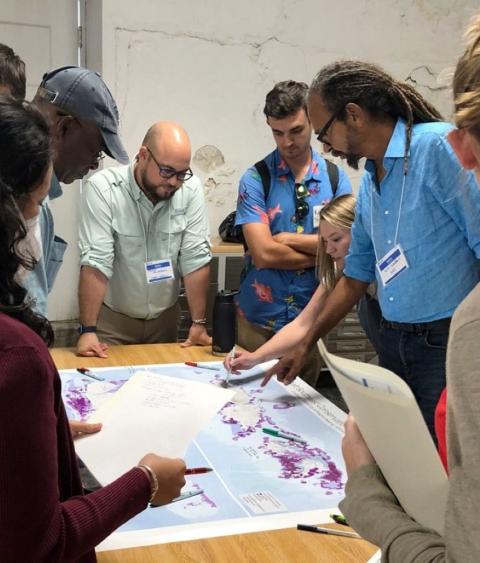
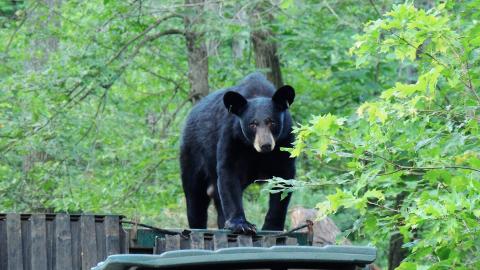
As a state wildlife agency director faced with black bear management challenges, I established a Community Collaborative to discuss bear management strategies with community members. I thought sitting down to gain understanding and appreciation for one another’s perspectives would be helpful in resolving some of the challenges surrounding the issue. As it turned out, our single biggest challenge was arriving at agreement over acceptable human/bear coexistence. What ended the effort was our inability to come to agreement on basic questions like; how close to civilization should bears be allowed? Or how many bears close to, or within, an urban area is too many? And what do we do with bears that “violate” the agreed proximity. The inability for us to reach agreement on the parameters of coexistence, like what levels of conflict or risk were acceptable, ultimately doomed the group’s progress.
Those facing some risk from coexisting with animals, those with legal liability, and those most impacted by the presence of a species, often feel very different than those without risk, with no liability, and unimpacted by the presence of a species. Complicating matters further, even those with equal levels of risk, liability, and impact, often feel differently regarding the parameters of coexistence.
Make no mistake, I love animals and I’m fascinated by large carnivores, keystone species, and landscape-scale home ranges. As a young boy, whenever tasked with book reports or reading assignments in school, I was always drawn to the books based on the person versus nature conflict narrative that often involved human-wildlife conflicts.
Perhaps this fascination with this type of narrative is because it explores deeper questions about humanity’s role, our impact, and our connection to the environment. I read books about polar bears and their hunting prowess and bold forays into populated villages, books about the sheer power of how a grizzly bear could drop a bison with the swipe of its paw, and stories about wolves, their pack dynamics, their cooperative hunting style, and intelligence. This fascination may well be the reason I pursued a career in wildlife, and it continues to fascinate me still today – I can’t imagine a North American landscape lacking these creatures. Despite that, just as the public lands “multiple use mandate” does not mean every use, everywhere, I would argue that coexistence does not mean all things in every place, a notion perhaps troubling to some.
The Role of Proximity on Perception
I was living in Southeast Idaho in the mid-1990s and during that time wolves were reintroduced to Yellowstone. Friends and colleagues around the country frequently asked for my thoughts or opinion on the reintroduction of wolves into the Greater Yellowstone Ecosystem. They asked me partly due to their awareness of my wildlife background, but more so because of my geographic proximity to the issue. They naturally assumed, since I lived closer to the reintroduction site than they did, I would be more aware of the specific impacts of the release and the consequences to local communities. It seems geographic proximity to an event has an acknowledged effect on perceptions of coexistence.
“We simply need that wild country available to us... For it can be a means of reassuring ourselves of our sanity as creatures, a part of the geography of hope.” - Author Wallace Stegner
Research in social psychology and human-wildlife conflict studies suggests that people who are farther away and less directly affected by a conflict or difficult coexistence situation tend to be more supportive of coexistence than those living in proximity.
This phenomenon presents some significant challenges to the notion of coexistence, particularly in a democratic society where, as a matter of consequence, most of the voting and vested public live farther removed from the local coexistence impacts. This is true for most species as the areas of impact from coexistence are often rural, isolated, and geographically limited.
This phenomenon is often explained by several factors:
- Direct Impact and Threat: Communities living near a conflict or a challenging situation (e.g., human-wildlife conflict, intergroup tensions) experience a direct threat to their resources, status, safety, or livelihoods. This immediate personal risk often leads to heightened animosity, fear, and a desire to distance themselves from the “out-group” (either people or animals).
- Abstract vs. Concrete Experience: For people who are geographically or socially distant, the situation is often an abstract concept, allowing for a more idealistic or theoretical stance on coexistence. They are not faced with the daily, “uncomfortable negotiation” and practical difficulties that those on the front lines experience.
- Amplified Impressions: Physical proximity tends to amplify socio-evaluative impressions, both positive and negative. If a situation involves negative interactions or perceived threat, living close by intensifies those negative feelings and attitudes.
- Objective vs. Subjective Possibility of Harm: When individuals are far away, the objective possibility of harm from an “out-group” is low, making it easier to be cooperative. For those nearby, the perceived threat is higher, promoting defensive reactions.
In essence, while distant individuals may advocate for peaceful coexistence as an ideal, those who face daily challenges related to proximity often prioritize practical solutions and security, which can sometimes conflict with a purely coexistence-based approach.
The Inevitability of Coexistence Conflict
As our human population continues to grow and our distribution and developments continue to expand, the issue of coexistence will feature more prominently in our conversations and conflicts.
How do we acknowledge the beauty in all creatures, the inherent right for them to exist, but perhaps not always in areas that result in heightened human-wildlife conflicts? How do we continue to have wolves and grizzlies on the North American landscape and simultaneously minimize the impacts to those living closest?
I certainly don’t profess to have the answer, nor do I believe there is a single answer surrounding each of these complex issues of coexistence, but I do believe there is a critical role in many of these debates for large, intact tracts of public land. As the human population grows, at some point the refugia for these big, sometimes less coexistent-friendly critters will become too small and disconnected to afford them what they need to survive.
The large expanses of connected landscapes in which large carnivores roam freely with limited or minimal conflict are invaluable and most are public lands. Not only do we need it for the creatures who rely upon it, but we need it for ourselves and our own connections to nature. Author Wallace Stegner wrote, “We simply need that wild country available to us... For it can be a means of reassuring ourselves of our sanity as creatures, a part of the geography of hope.” And beyond that geography of hope that Stegner writes about, these lands provide both homes for coexistence of landscape-scale species as well as places for connection and healing of people in ways that perpetuate the good in humanity and for the benefit of species and ourselves.