Outdoor News Bulletin
Partners United: Protecting Tennessee’s Native Bass Heritage
Angling for black basses in Tennessee contributes a significant portion to the $1.7 billion per year impact to the State’s economy generated from fisheries. The Tennessee Wildlife Resources Agency (TWRA), Tennessee Tech University (TTU), the Tennessee Cooperative Fishery Research Unit (TNCFRU), and bass anglers are working together to address an emerging conservation challenge: the spread of Alabama bass (Micropterus henshalli) into Tennessee waters. Together, these partners are working to understand and manage a threat unlike most invasive species where concerns often focus on competition or predation. The Alabama bass invasion in Tennessee creates concerns for hybridization with native species and therefore a potential loss of pure native population genetics. It also creates challenges for management and enforcement of regulations because anglers, managers, and officers cannot always look at a fish and tell exactly what it is, thereby requiring genetics analyses.
The Alabama Bass Issue: Why Tennessee Cares
Alabama bass is one of seventeen currently recognized black bass species in North America, but they are not native to Tennessee. Tennessee currently recognizes five native black bass species: largemouth bass (Micropterus nigricans), smallmouth bass (M. dolomieu), spotted bass (M. punctulatus), and redeye bass (M. coosae). Alabama bass are native to the Mobile Basin in Alabama, Mississippi, and Georgia, but they have been moved outside their native waters and their impact as an aquatic invasive species can go far beyond typical ecological disruption. Their ability to interbreed with native species – especially Tennessee’s state sportfish, smallmouth bass – poses a serious risk to maintaining healthy, genetically pure populations. Other southeastern states have already seen how invasive Alabama bass can displace native species, hybridize with native black bass, and thus, ruin the population genetic integrity and change recreational fisheries. Tennessee is actively trying to minimize the threat of Alabama bass invasion using regulatory methods and by establishing a baseline genetics database of statewide distribution.
A Statewide Science Effort: Tracking Where Alabama Bass Are Spreading
To understand how far Alabama bass have advanced and where hybridization is occurring, TWRA biologists are collecting fin clips from black bass across all major reservoirs and selected rivers and lakes in Tennessee. Genetic researchers at TTU and the TNCFRU then analyze samples from individual fish at each location to determine whether the fish is a pure species or a hybrid, and if so, which species contributed to its ancestry.
In March 2026, the team joined forces with TWRA to sample catches from 56 of the most elite professional bass anglers in the world who were fishing the Tennessee River in the Bassmaster Classic, the “Super Bowl” of bass fishing tournaments hosted in Knoxville, Tennessee. Bass brought to the tournament weigh-in displaying hybrid characteristics, or species identification uncertainty from visual traits, were subject to a fin clip for genetic analysis. This resulted in 30 new samples from individual fish to begin to inform TWRA with new genetic data from the Tennessee River.

The Bassmaster Classic samples supplemented ongoing efforts of the partnership that include TWRA samples from standardized electrofishing surveys and angler provided samples to inform TWRA on the status of hybridization in the system. Ultimately, the statewide genetic survey will provide data needed to identify invasion hotspots and remaining pure unaffected smallmouth bass populations, and to evaluate the vulnerability of native smallmouth bass populations.
“The partnership between the Tennessee Wildlife Resources Agency (TWRA) and the U.S. Geological Survey Cooperative Fish and Wildlife Research Units Program at Tennessee Tech is critical for understanding and conserving Tennessee’s native black bass populations. By combining TWRA’s field management expertise with the research and genetic analysis capabilities of Tennessee Tech scientists, the collaboration allows for rapid detection and evaluation of hybridization between Alabama bass and native species such as smallmouth bass,” commented Vic DiCenzo, PhD, reservoir program manager with TWRA. “Data collected during high-profile events like the Bassmaster Classic provide valuable real-world insights into the spread of introgression. This cooperative effort ensures that management and enforcement decisions are grounded in the best available science and that regulations will be informed for helping protect Tennessee’s endemic black bass resources for future generations of anglers.”
A Chance to Act Early
This project gives Tennessee a unique opportunity: the chance to detect invasive Alabama bass and their hybrids early enough to guide proactive management. Understanding genetic mixing in real time allows fishery managers to protect native populations before declines become irreversible as seen in other places where Alabama bass have taken over at the degradation of other native black basses and changed fisheries and ecosystems.
How Anglers Can Help Stop the Spread

Anglers play a critical role in safeguarding Tennessee’s black basses. Reporting unusual catches, supporting harvest regulations, avoiding unauthorized fish releases, and staying informed about invasive species all help slow the spread of Alabama bass.
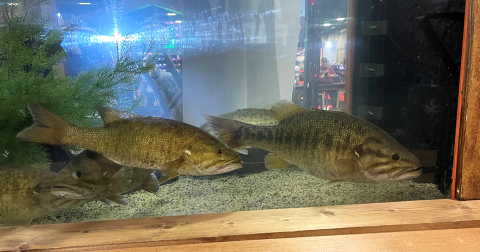
Another public education aspect of the work involves partnering with Bass Pro Shops to put hybrid bass and Alabama bass on display alongside messaging to discourage anglers from moving fish around. While some hybrids are visually identifiable, some are not because they show mixed physical characteristics from both parents that could be a combination of species. Many bass anglers have caught what they would call a “meanmouth” or “hybrid bass”, yet it takes genetics evaluation to determine what it really was. This means that anglers who may think they are simply moving smallmouth bass from one place to another may be unintentionally moving hybrid Alabama bass masquerading as smallmouth bass!
The inability of even the most trained eye, whether it be a professional bass angler or a biologist, to identify some hybrids makes preventing the moving of live bass a major priority. Proactively, TWRA has regulations prohibiting the stocking of live fish into public waterbodies to prevent the spread of invasive species. By working with biologists and sharing what they see on the water, anglers become essential partners in protecting the future of Tennessee’s native bass fisheries.
Read more about Alabama bass in Tennessee shared by the TWRA.
The ONB features articles from Cooperative Fish and Wildlife Research Units across the country. Working with key cooperators, including the Wildlife Management Institute, Units are leading exciting, new fish and wildlife research projects that we believe our readers will appreciate reading about. This article was written by Tom Miles, a PhD student at Tennessee Tech University who is mentored by Mark Rogers, Unit Leader, USGS Tennessee Cooperative Fishery Research Unit, Tennessee Tech University. Learn more about the Cooperative Research Units Program or email us at: crucomms@usgs,gov.