Outdoor News Bulletin
Innovative Partnering for Private Lands in America
For decades the story has been the same: a species slides toward the brink, the federal government lists it under the Endangered Species Act (ESA), and suddenly millions of acres of private land become a regulatory minefield. Farmers, ranchers, and forest owners, people who often care deeply about the wildlife on their property, are told they must now secure a federal permit if they want certainty that routine operations or even beneficial habitat work won’t trigger fines, lawsuits, or land-use restrictions.
A New Path for Delivering Recovery
The permit vehicle for proactive conservation actions used to be called a Safe Harbor Agreement or a Candidate Conservation Agreement with Assurances. In 2024, the U.S. Fish and Wildlife Service (USFWS) combined the two into a single, modernized instrument called a Conservation Benefit Agreement (CBA). CBAs are a genuine and important step forward in streamlining and modernizing the ESA’s Section 10 process, and they remain the right tool for certain complex, multi-party, or long-term planning efforts where the non-federal partner wants to take the lead on permitting on-the-ground species and habitat conservation practices.
But for most of the voluntary, landscape-scale conservation that America needs right now, there is a far better, faster, and lower-risk pathway, one that is delivering more on-the-ground recovery than anyone thought possible just a short time ago. A tool that has been hiding in plain sight for decades builds it: the Partners for Fish and Wildlife (PFW) Program. Partners for Fish and Wildlife is a voluntary, incentive-based program created in 1987 and formally authorized by law in 2006. For years, PFW quietly restored wetlands, forested ecosystems, and brought back native prairies with willing private landowners. What almost no one outside a handful of field biologists realized is that the same statutory authority given to the USFWS that let the agency provide cost-share and professional know-how for a routine habitat restoration project also lets the agency provide iron-clad regulatory assurances, without the landowner ever touching a Section 10 permit.
Here's how it works.
When the Service enters a cooperative agreement under the PFW Program, federal biologists are substantially involved in planning, funding, and often implementing the project. That substantial involvement explicitly defined in the Federal Grant and Cooperative Agreement Act of 1977 (Public Law 95-224) makes the project a federal action, which triggers consultation under Section 7 of the Endangered Species Act. The Service consults with itself through a process called “intra-Service consultation”. Through that process, the agency then writes a biological opinion (BO) if incidental take is reasonably certain to occur or an informal consultation if it is not. If the agency writes a BO, it could issue an incidental take statement. This incidental take statement allows limited, unavoidable harm that may occur while enhancing populations of listed and at-risk species. For example, these could include a temporary disturbance during prescribed burning activities, handling and translocation of individuals, or habitat manipulation that ultimately benefits the targeted protected species. Crucially, because the federal government is the actor, the take authorization and the accompanying “no surprises”-style assurances travel with the project to the private landowner. The landowner never applies for, pays for, or holds a permit. That’s part of the federal government’s substantial involvement in the project.
The model comes in two equally powerful forms:
- Direct agreements with individual landowners. For example, a rancher in Georgia or in Wyoming wants to restore a listed species habitat on their land. The local PFW biologist drafts the plan, the Service consults on the ESA, and the landowner signs the agreement. Done.
- Umbrella agreements with trusted partners. When planning species conservation and recovery actions for vast areas of land with multiple private landowners, the USFWS and its partners can create programmatic cooperative agreements. Usually, non-governmental organizations (NGOs) develop these types of agreements, serving or representing multiple individual landowners. One recent example of such an agreement is the National Wildlife Conservation Initiative (WCI). This initiative is a partnership between the National Alliance of Forest Owners (NAFO), the National Council for Air and Stream Improvement, Inc. (NCASI), and the USFWS to implement best management practices, habitat and species restoration actions across privately owned working forest lands in the USA.
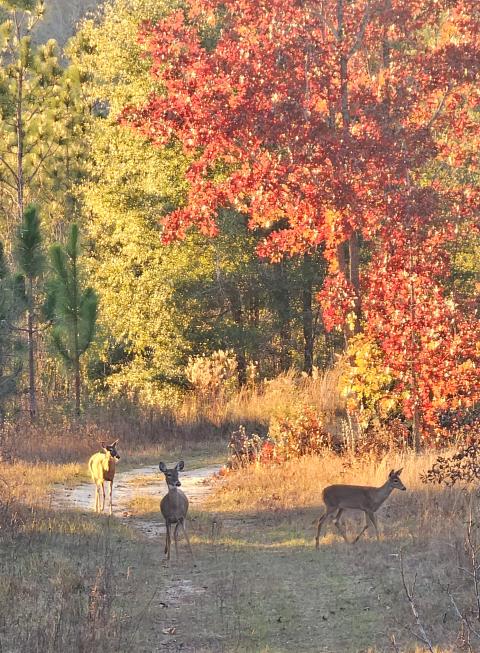
Once the programmatic agreement and its accompanying ESA consultation are in place, any member, partner, or sub-grantee can enroll, just like in an individual PFW landowner agreement. It only takes a few weeks through a simple certificate of inclusion. In addition, in situations where foundations or any other private or public funders provide the dollars, the partners signing the programmatic cooperative agreement or the certificates of inclusion plan and coordinate the on-the-ground actions, and the USFWS supplies the regulatory assurances through the ESA consultation process that covers the entire cooperative agreement. Here, the non-federal funder (e.g., foundations, NGOs) never enters the regulatory chain at all, and individual landowners simply join via the certificate of inclusion under the master programmatic PFW agreement.
The Magic of Scaling-Up Conservation
This programmatic approach is where the real scaling magic happens. One biological opinion can cover hundreds or thousands of individual projects across multiple states and ownerships. The WCI already blankets over 46 million acres of working forests with this kind of structure. A similar longleaf-focused umbrella led by Conservation without Conflict and funded by NFWF is doing the same across eight southeastern states.
The results speak for themselves:
- If the team gets funding, they will complete the process from the first site visit to signing the PFW agreement with full regulatory coverage within two to six months.
- With a programmatic PFW agreement in place, from first conversation to shovels in the ground on multi-thousand-acre landscapes: less than 60 days.
- Cost to the landowner for the assurance language itself: zero dollars.
Contrast that with even the improved CBA pathway, which, while streamlined, still averages two to four years and requires the landowner to bear primary regulatory and enforcement risk.
The difference is not theoretical. In the longleaf belt of the Southeast, private landowners who once refused Safe Harbor Agreements because “I’m not signing anything that makes me the bad guy if a listed species gets hurt” are now enthusiastically enrolling under PFW cooperative agreements that help them burn, thin, and actively enhance populations of tortoises, woodpeckers, and salamanders with full federal regulatory safeguards. In the span of two fire seasons, thousands of acres have moved from regulatory gridlock to active recovery and conservation.
Why does this matter now?
Because the math of species recovery has changed. Climate-driven range shifts, invasive species, and habitat fragmentation mean we simply cannot wait three or more years for a permit every time a landowner wants to restore habitat that will boost populations of listed and at-risk species. We need tools that match the speed of both the threats and the opportunities across the entire nation.
The PFW Section 7 pathway is that tool. It is:
- Legally sound – built on statutes Congress has reauthorized repeatedly.
- Risk-free for landowners – the federal government, not the landowner, is the regulated entity.
- Fast – measured in months, not years.
- Scalable – one programmatic consultation can benefit a single parcel or entire landscapes.
- Proven – the mechanism has been implemented efficiently and with no issues.

The Right Tool, Right Now
Conservation Benefit Agreements still have their place for unique, highly complex situations where the non-federal partner prefers to drive the permitting process. But in our experience, for the overwhelming majority of landowners across the American private lands landscape who simply want to do the right thing without becoming federal permittees, the PFW cooperative agreement with its ESA consultation process, proven, ready, and waiting, is the right tool, right now.
Hunters, anglers, forest owners, and conservationists are celebrating. This is what successful public-private partnership looks like: the government using its authority not to threaten, but to lead; landowners stepping forward not out of fear, but out of pride; and imperiled species getting real help while they still have time to recover.
The templates are written. The biological opinions are on the shelf. The field staff across the nation are ready. All that remains to scale this up is for the USFWS to declare this the default national model for voluntary, assured conservation on private lands.
When that happens. and I am confident that it will, the quiet revolution that started with a few innovative biologists and private landowners in Georgia and Florida will become the new standard for how America saves its wildlife, one willing landowner at a time.