Outdoor News Bulletin
Science in the Gray
Balance only exists when neither side dominates the other; the moment one side takes too much, something else begins to suffer. One Health is built on that balance and on understanding the connectedness of healthy ecosystems, wildlife, and human health. Yet we often crave clarity in science. We want a clear answer, a right decision, a single agency responsible for solving a problem. We want defined boundaries and clean lines of authority. But the real world rarely offers such simplicity. Instead, we work in complexity, where jurisdictions overlap, disciplines intersect, and no one entity holds all the answers or all the responsibility.
I call this the gray space.
Life in the Gray
The gray space is where wildlife health becomes human health. It is where environmental conditions shape disease emergence, where ecosystems influence public safety, and where conservation is no longer separate from medicine or public health. It is also where discomfort lives, because blurred lines challenge traditional structures and require organizations to work beyond familiar boundaries. But this gray space is not a failure of structure. It is the reality of our interconnected world.
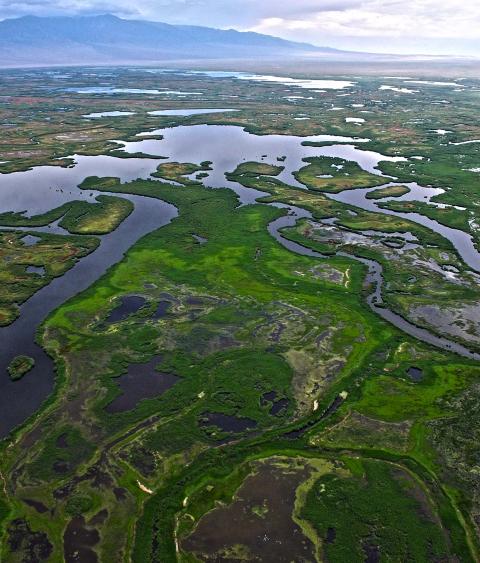
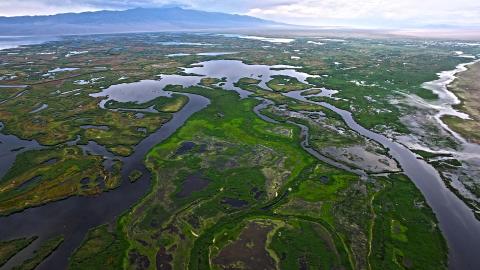
One way to understand this interconnectedness is through ecosystem health itself. Ecosystems are not separate from human systems; they function as foundational life-support systems that behave much like infrastructure. Wetlands filter and store water, forests regulate climate and reduce flood risk, soils cycle nutrients and suppress disease, and oceans stabilize weather patterns. These are forms of natural infrastructure that operate continuously, often invisibly, and at scales that directly shape human and animal well-being.
When ecosystems are healthy, they quietly support the conditions that make life and health possible. When they degrade, those supports weaken. The effects are not abstract, they show up as poorer air and water quality, increased exposure to pollutants, and expanded ranges of disease vectors such as mosquitoes and ticks. Even mental health is affected, as loss of natural spaces and environmental stability contributes to stress and reduced well-being.
In this way, human health is inseparable from ecosystem function. Environmental decline does not remain in the background; it emerges later as increased healthcare demand, higher disease burden, and uneven impacts across communities. What appears as a medical or public health challenge is often rooted in upstream ecological change.
This framing also reinforces the importance of prevention. Just as physical infrastructure requires maintenance to prevent collapse, ecosystems require protection and stewardship to maintain their function. Degradation is best understood as deferred infrastructure failure, slow weakening of systems that support life, with consequences that may be delayed but are often widespread and difficult to reverse.
“Compromise. It’s something that’s kinda in between….it’s like halfway happy.” - Stranger Things
This is where One Health becomes more than a concept. It becomes a way of thinking. One Health recognizes that the health of people, animals, and the environment are inseparable. Protecting one requires understanding the others. It means asking not only what the disease is, but why it is occurring, what conditions allowed it to emerge, who is affected, and how we can respond before it escalates into a larger system-wide challenge.
Finding Answers in Gray Space
Working in the gray space requires collaboration, communication, and a willingness to look beyond traditional roles. Wildlife professionals, veterinarians, public health experts, agricultural partners, environmental scientists, researchers, and communities all bring different knowledge and expertise. No single discipline can see the full system. The strongest solutions emerge when these perspectives come together rather than operate in isolation.
Missouri has increasingly embraced this kind of integrated thinking by recognizing that wildlife health is inseparable from broader ecosystem and public health outcomes. One example of this commitment is the development of a multi-agency laboratory facility that brings together the laboratory functions of five state agencies under one roof: the Missouri Department of Conservation, Missouri Department of Agriculture, Missouri Department of Health and Senior Services, Missouri Department of Natural Resources, and the Missouri State Highway Patrol.
This facility represents the gray space in action. By co-locating expertise, it creates opportunities to share data, align priorities, and strengthen communication across disciplines that have traditionally operated in parallel. Working side by side allows for earlier detection of emerging issues, more coordinated responses, and a deeper understanding of how environmental, animal, and human health systems intersect.
Systems not Silos
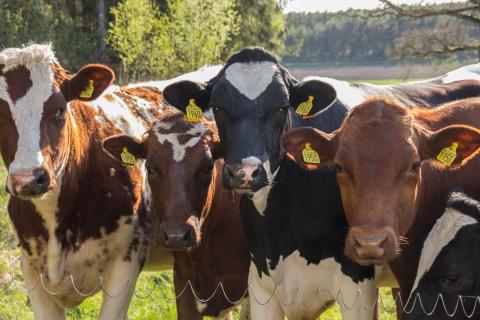
Emerging disease challenges make this even more evident. Issues such as New World screwworm, tick-borne diseases, and other vector-driven or wildlife-associated pathogens demonstrate how quickly ecological shifts can become public health concerns. These agents do not recognize jurisdictional boundaries. They move through ecosystems, wildlife populations, livestock systems, and human communities without regard for organizational structure. Because of this, responses cannot be siloed. They must be coordinated across sectors and grounded in shared understanding of ecological conditions and disease dynamics. The gray space is where this coordination becomes possible, where science, policy, and management intersect to address problems that no single system can solve alone.
Working in this space also means accepting that multiple priorities can exist at the same time. Conservation goals, agricultural needs, ecosystem integrity, and public safety are not always perfectly aligned, yet they are always connected. Balance does not mean every objective is fully satisfied; it means recognizing trade-offs while maintaining the integrity of the larger system.
The gray space can feel uncertain because it resists simple answers. But that uncertainty is not a weakness, it is a reflection of reality. Complex systems do not behave in linear or isolated ways, and our approaches must reflect that.
Ultimately, the future of wildlife health, ecosystem resilience, and public well-being will depend on our ability to work within this complexity. The gray space is not where clarity disappears, it is where collaboration becomes possible, where systems thinking replaces silos, and where solutions become more durable because they reflect how the world actually works.
Because the health of one is connected to the health of all.