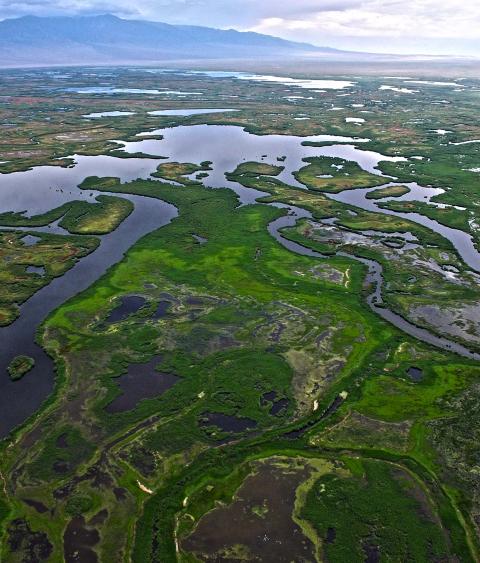
Science in the Gray Balance only exists when neither side dominates the other; the moment one side takes too much, something else begins to suffer. One Health is built on that balance and on understanding the connectedness of healthy ecosystems, wildlife, and human health. Yet we often crave clarity in science. We want a clear answer, a right decision, a single agency responsible for solving a problem. We want defined boundaries and clean lines of authority. But the real world rarely offers such simplicity. Instead, we work in complexity, where jurisdictions overlap, disciplines intersect, and no one entity holds all the answers or all the responsibility. I call this the gray space. Read The Article
President's Message Running Out of Up Nearly every conference call I have joined lately has opened with weather. Not as small talk but as a report. Flooding in Idaho, and again in Iowa. Thunder in Pennsylvania loud enough to derail an agenda. Snow in Montana well after the season should have closed. Heat dome in the East canceling activities. Everyone has a story now, and the stories keep arriving from every direction at once. Read The Article
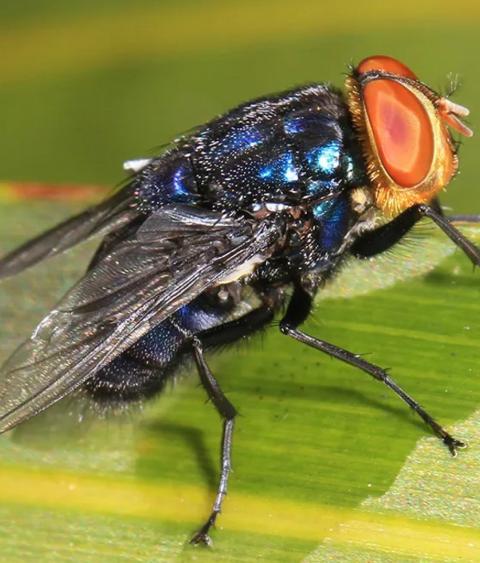
Tracking New World Screwworm in the U.S. New World Screwworm (NWS) once again is threatening warm-blooded birds and mammals, including wild and domestic animals and humans, in the United States. This blowfly species was detected in Texas on June 3, 2026, after being tracked as it moved northward through Mexico. Through July 12, 2026, there have been 35 cases detected in sheep, cattle, goats and two dogs in Texas and New Mexico. It has not been reported in any feral or wild animals, nor in fly traps, despite ongoing surveillance. Read The Article
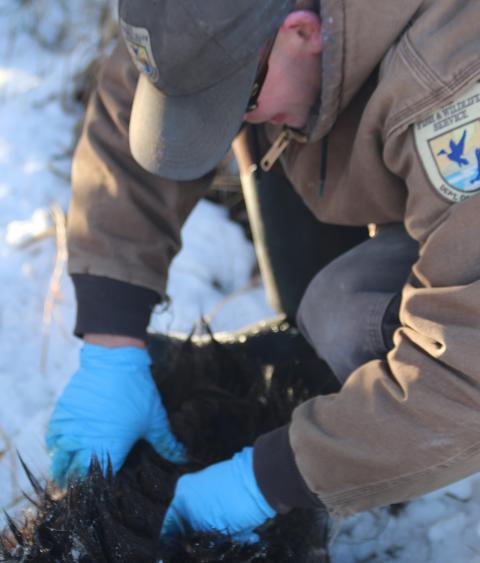
Leveraging Regional Fish and Wildlife Health Coordination Across the U.S. Increasing threats to the health of fish and wildlife populations, including emerging infectious and non-infectious diseases and toxins, challenge our ability to manage and conserve these valued resources. Diseases such as chronic wasting disease (CWD), highly pathogenic avian influenza virus, and most recently, New World Screwworm (NWS), have considerable ecological, cultural, and economic impacts, highlighting the interconnectedness of wildlife, domestic animal, human, and environmental health and underscoring the critical need for coordination of fish and wildlife health activities in North America. Read The Article