Outdoor News Bulletin
Tracking New World Screwworm in the U.S.
New World Screwworm (NWS) once again is threatening warm-blooded birds and mammals, including wild and domestic animals and humans, in the United States. This blowfly species was detected in Texas on June 3, 2026, after being tracked as it moved northward through Mexico. Through July 12, 2026, there have been 35 cases detected in sheep, cattle, goats and two dogs in Texas and New Mexico. It has not been reported in any feral or wild animals, nor in fly traps, despite ongoing surveillance.
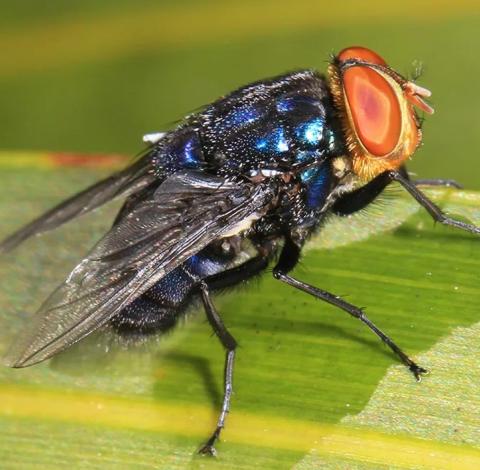
The screwworm fly (Cochliomyia hominivorax) was eradicated from the United States in the 1960s, but prior to that it was a significant pathogen for wildlife and livestock. For example, from the 1920s through the 1950s, NWS apparently reduced Florida’s deer population significantly through decreased fawn survival and increased adult deer mortality. Following eradication of NWS from the United States, it remained endemic in Cuba and the Dominican Republic in the Caribbean, and in South America.
The NWS females can lay hundreds of eggs in injured tissue or mucous membranes. Its larvae (maggots) burrow into and severely damage the living tissue of animals unlike native blowfly maggots, which only infest decaying flesh. Eggs may be laid in wounds as small as tick bites, in navels of newborns and genitalia of females that recently gave birth, and in any skin injuries due to trauma. Myiasis (maggot infestation of tissue) by NWS can cause devastating tissue damage and be fatal if untreated.
Sterilized Fly Release
Eradication in the past has been achieved primarily by the release of hundreds of millions of sterilized NWS flies. Because female NWS flies mate only once, mating of a wild female with a sterilized male interrupts the breeding cycle and can reduce NWS populations to eventual eradication. This method currently is being employed by state and federal authorities in the United States and Mexico via the release of hundreds of millions of sterile NWS flies that were propagated in a facility in Panama. Additional facilities are due to come online soon in Mexico and Texas. Release of sterilized NWS flies is being augmented by surveillance of domestic and wild animals, use of drones and fly traps, treatment and wound management of affected animals, and restricted animal movements from affected areas.
The risk that NWS poses to wildlife is not theoretical. In addition to the impacts on Florida’s deer population in the 20th century, an incursion of NWS in the Florida Keys in 2016 killed more than 130 endangered Key Deer. Fortunately, intensive management efforts, including sterile fly release, brought the incursion to an end before it could become firmly established or invade the mainland.
Additional information on the current NWS outbreak and response to it can be found at screwworm.gov.