Outdoor News Bulletin
From Practice to Principle
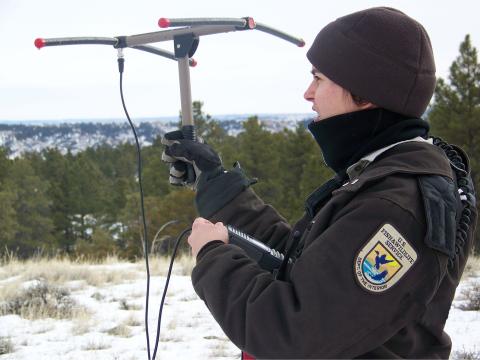
When I started out as a field biologist, my world was the practice of conservation. It was measured in radio collars and transect lines, in trap sites checked before dawn and data sheets filled in by headlamp. What mattered to me most was what I did on the ground, day after day. Policy was something that happened in a building far away and one that I rarely entered, written by people I seldom if ever met.
Years later, as a state wildlife agency director, my world became policy. Commission policy, legislative policy, budget policy. I will admit it without much embarrassment: I became a policy wonk, and a fairly devoted one. I came to believe that policy was the lever that moved the world, that if you got the policy right the practice would follow, and that most of what ailed conservation could be traced to a policy that was missing, broken, or poorly written.
Now, at WMI, I have been given an even rarer vantage than either of those. The work here affords me the chance to step back and look at the entire arc of American conservation – its history, its paradigms, and the way those paradigms have shaped both the policies we write and the practices we carry out. From that vantage I have arrived at a conclusion that would have puzzled the field biologist and unsettled the agency director: I fear we lack clarity, unity, and even basic familiarity with the principles that are supposed to sit beneath all of it.
How the Pieces Are Supposed to Fit
Let me lay out how I think the pieces fit together.
- Principles come first. They are what we believe, our values about wildlife, wild places, and our obligations to both.
- Policy comes next. Policy is the jurisdictional manifestation of those values, the act of translating a belief into a rule that a government, an agency, or a commission can actually carry out.
- Practice comes last. Practice is what happens when the rule meets the country.
Principles should underlie policy. Policy should drive practice. Written that way, on a single line, it looks almost too obvious to say out loud.
Fluent in Policy
And yet look at where we spend our energy and attention. We spend it almost entirely on the middle tier. We debate policy endlessly – in commission chambers, in legislative hearings, in the public comment period, in the pages of this very bulletin. We are fluent in policy. What we rarely do is descend to the layer beneath it and ask whether the principle that should be generating the policy is one we have ever actually identified, articulated, agreed upon, or could explain to a new employee on their first day.
The consequences of skipping that layer are visible everywhere. Our policies are often inconsistent, because they are generated case by case rather than drawn from a shared foundation. We find ourselves having the same policy debates over and over, decade after decade, because we never resolved the underlying question of principle that the debate is really about. And as a profession we lack a clear, unified sense of what our policy is even for, what end it serves, what value it expresses. We have become very good at arguing about the rules and, strangely and perhaps sadly, uncurious about what the rules are supposed to stand on.
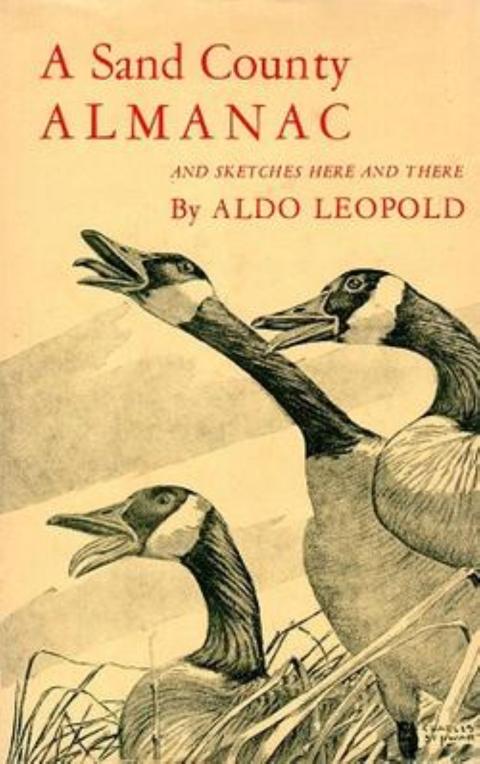
None of this is for lack of raw material, and the way we reach for what we do have, tells the whole story. Aldo Leopold’s A Sand County Almanac still moves conservation-minded readers the way few works ever have; open it in front of a room of professionals and you will see the recognition on their faces. But Leopold gave us a moral vision, not an operating code, and we reach for it precisely because it supplies the resonance our policy debates so often lack.
The North American Model of Wildlife Conservation gets pressed into harder service still. It is a real and valuable set of principles, but a narrow and largely descriptive one, built for the game-and-hunter system of a particular era and never intended as a comprehensive framework for everything we now ask of conservation. And yet principle-hungry policymakers grab it and cling to it, offering it as the principle to follow because it is the most complete thing on the shelf.
The way we clutch these, asking each to do a job it was never built to do, is not a weakness to be embarrassed by. It is the clearest evidence we have that the appetite for a shared, articulated set of principles is real, and that we have not yet fed it.
The Question We Skip
There is another way to see the same neglect, and it may be the most useful one. Simon Sinek made a version of this point in the world of leadership and organizations, observing that the most enduring of them start with why, while the rest are consumed by what and how.
The pattern is ours too. We spend an enormous share of our energy on what we wish were different, what is broken, what should work better, what ought to look another way. We spend nearly as much on how to bring it about, what to do, who should do it, where to begin. These are the questions that fill our meetings, our strategic plans, our agendas, and our hallway conversations.
What almost never claims the same time, or energy, or honest debate is why. Why this work matters. Why it is worth doing at all. Why we would choose this end over another. The why is our motivation, and motivation is not a soft or secondary concern. It is the principle itself, named in plain language. When we skip it, we are not skipping a preamble; we are skipping the one thing that can keep the what and the how pointed in a consistent direction.
The Last Great Pulse
It was not always this quiet beneath the surface. The last time American conservation principles surfaced into broad public consciousness was the stretch from roughly 1962 to 1973. Rachel Carson published Silent Spring. The Cuyahoga River caught fire. Crude oil fouled the channel off Santa Barbara.
Those events, and others like them, produced something we have not seen since: a widespread, shared, visceral sense that something was deeply wrong and that our principles were being violated. Clean water. Clean air. Species worth protecting for their own sake. These were not new ideas in 1969, but the crisis pushed them up out of the technical literature and into the national consciousness, where enough people held them clearly enough, at the same time, to demand that they be written into law.
What followed was a genuine policy pulse. The National Environmental Policy Act. The Clean Air Act. The Clean Water Act. The Endangered Species Act. The Environmental Protection Agency itself. Those policies are still with us more than half a century later. And here is the part worth sitting with: they have endured not because every one of them works perfectly – plenty are clumsy, dated, or only partially effective – but because they are anchored to principles broad and deep enough that no single administration has been able to dislodge them.
Principled policy is durable policy. It outlasts the power that produced it.
Principle, or Power?
Now let me be honest about something, because the history does not let me off easily. It is fair to ask whether that pulse was driven by principle at all, or whether it was driven by raw political power that a crisis happened to make available. Carson did not hand the country a clearly articulated principle and watch policy follow. She handed the country a horror, and horror created the political will, and the principles were named in the rush of that will rather than before it. If we are candid, power drives policy at least as often as principle does. Perhaps more often.
I have made a certain peace with that. Here is where I have landed: power can produce a policy, but principle is what makes it last, and what lets us act with any consistency in the long stretches between the rare moments when power aligns. The policies of the 1970s survived precisely because the principles beneath them were broadly enough shared that they could not be cleanly partisan-coded.
You can read this in the mechanism itself. From the Wilderness Act through the 1990 Clean Air Act amendments, the policy that endured was made by broad legislation – the Endangered Species Act cleared the Senate 92 to nothing, and a Republican president signed it into law. That is what it looks like when a principle is held so widely that power aligns across the factions on its own.
After about 1990 that engine stalled, and policymaking migrated to venues that do not require a shared principle to run: executive orders, agency rules, monument proclamations, the courts. Those venues swing with every administration. You can see the whole argument in the half-life, the principled statutes of the seventies are still standing, while the executive actions of the last two decades rarely outlive the administration that wrote them. Shared principle was not the decoration on those old policies. It was the reason they held.
We have a recent, smaller example of the same thing. Habitat connectivity, corridors, crossings – the whole landscape frame crossed from fringe to consensus over the past two decades and produced real, durable, bipartisan policy. But notice what that was. It was a single idea reaching maturity. It was not a wholesale re-grounding of the entire conservation enterprise the way the early 1970s were. We have had issue-level advances since then, and good ones. We have not had another broad pulse.
I want to be careful here, because I am not calling for one. I am not arguing that our values are wrong and need replacing, or that we should go searching for a new set of principles to live by. I do not think that is our problem. Our principles are largely sound, if incomplete. The problem is that we have stopped tending them and you cannot teach, defend, or consistently apply a principle you have stopped paying attention to. What we need is not realignment. It is reflection, reaffirmation, and reacquaintance.
The Water is Not Calm
We have no Cuyahoga right now. No oil-blackened channel, no burning river, no single ecological catastrophe to put conservation on the front page and force the public to confront a principle being violated. I am not wishing for one. We should never want a disaster as the price for clarity.
But the absence of catastrophe is not the same as calm, and I do not want to suggest otherwise. The water is not calm. The current political landscape has brought significant change and real challenge to conservation, to our agencies and partnerships, to our funding, to the durability of long-settled expectations, and to the people who carry out this work. Anyone paying attention can feel it.
Here is what I think is worth noticing about the difference. The two kinds of turbulence do almost opposite things. Ecological catastrophe tends to unify. It surfaces a shared principle into plain view where everyone can see it at once; no one defends a burning river. Political turbulence tends to scatter. It strains relationships, fractures attention, and makes common ground harder to see rather than easier. It pulls our principles apart instead of pushing them together.
So I would not count on this moment to do for us what 1969 did. This kind of disruption does not produce a pulse on its own; if anything, it makes the foundation harder to stand on. That is precisely why the work is ours to do, deliberately and on our own initiative. Much of it is reflection, reaffirmation, and reacquaintance: reflecting on the principles we already hold, reaffirming our commitment to them, and reacquainting ourselves and a new generation with them.
But it is not only restoration. Where our inherited principles have gone silent on conditions they were never written to address, the honest work also means adding new ones. This is not reinvention, and it is not principle improvised in the heat of a crisis. It is the deliberate work of making what we believe whole and current, complete enough and contemporary enough to meet what is actually in front of us. Do that, and we can move through turbulence with coherence instead of being scattered by it, ready to turn whatever comes next into durable policy.
And we need not wait until we agree on every why before we begin. On the most nuanced and contested questions, consensus around why will always be hard won, and on some we may never fully reach it. But we should not let the genuinely difficult cases persuade us that the why is hopeless ground.
There is a great deal of low-hanging fruit – the protection and enhancement of habitat, the importance of native species, attention to those that are threatened or endangered, the maintenance of biodiversity itself – where the why is far more widely shared than our hesitation would suggest. On those foundations, a clear and openly stated motivation should give us not less room to act together, but more. If we cannot agree on why those things matter, we have a problem deeper than policy. If we can – and I believe on these we largely can – then we owe it to ourselves to act accordingly.
I keep coming back to where I started. The field biologist in me cared about what we do. The agency director in me cared about the rules that govern it. Neither of them was wrong. But what the years have taught me is that neither one holds up without the layer we so rarely talk about; the bedrock of principle that both the practice and the policy are meant to rest on. Get that layer right, and everything above it finally has somewhere solid to stand.
Let's start there.