Outdoor News Bulletin
New USDA Migratory Big Game Framework Announced
On June 2, the U.S. Department of Agriculture announced a new conservation framework for federal, state, Tribal, and private landowner collaboration that will direct focused resources to conserve priority habitat used by migratory big game species in the West. The announcement was made during the Western Association of Fish and Wildlife Agencies (WAFWA) Summer Meeting in Boise, Idaho.
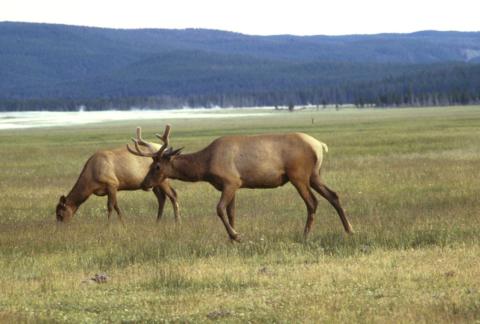
The USDA’s new Migratory Big Game: A Framework for Conservation Action plan solidifies a landscape-scale approach between USDA’s Farm Service Agency (FSA) and Natural Resources Conservation Service (NRCS), working closely with the state fish and wildlife agencies that have the trust responsibility to manage big game. The Framework brings together partners across 17 western states to address habitat risks facing big game species like mule deer, elk, and pronghorn as they move across the landscape. These species traverse a network of public and private lands that are increasingly fragmented or have declining habitat quality.
“We know that migratory big game rely on large and connected landscapes to meet their daily, seasonal and annual needs,” said Richard Fordyce, USDA’s Under Secretary for Farm Production and Conservation. “This new Framework for Conservation Action helps us better target our resources and align our efforts, which benefit wildlife as well as ranching operations. USDA introduced its first frameworks in 2020, during President Trump’s first term, and we want to continue using this successful model of supporting wildlife and ranching productivity and operations.”
Since 2018, after the Department of the Interior’s Secretarial Order 3362 was signed, states have led research and helped map priority big game migration corridors to identify barriers to movement and areas where habitat degradation could impact the sustainability of herds. This information has informed state action plans to identify priority efforts including improving forest and rangeland health, restoring native plant communities and fighting invasive species, as well as converting fencing to wildlife-friendly designs or facilitating movements across highways. The new Migratory Big Game Framework will help direct USDA funding and focused conservation action onto private lands within priority areas to address these challenges.
“We were honored to have Emily Fife join us at our summer meeting to announce USDA’s Migratory Big Game Framework that will focus considerable resources to implement the conservation priorities identified by our member states,” commented Zach Lowe, executive director of WAFWA. “State fish and wildlife agencies have taken the lead to identify the places and conservation actions that will most benefit big game as they move across western landscapes. This framework is critical to direct funding through USDA’s Farm Bill conservation programs toward targeted actions for wildlife on the private working lands in these state-identified migration corridors”
USDA’s Natural Resources Conservation Service (NRCS) uses Frameworks for Conservation Action (frameworks) to coordinate and track progress on addressing defined conservation concerns across large geographic areas. These frameworks provide a shared vision for targeting vulnerable landscapes that cross state boundaries and for voluntary conservation benefiting both agriculture and the environment. The Migratory Big Game Framework joins three other Working Lands for Wildlife frameworks, including the Great Plains Grasslands Biome Framework, the Sagebrush Biome Framework, and the Northern Bobwhite, Grasslands, and Savannas Framework. There is also a Western Water and Working Lands Framework modeled after the successful land-based frameworks. So far, the frameworks for conservation action have been highly effective, engaging over 8,400 producers and directing voluntary conservation efforts on more than 12 million acres.