Outdoor News Bulletin
Lessons Across Continents: The Principles Behind Lasting Conservation
In North America, wildlife management has developed around state-led institutions, hunting traditions, scientific management, and the principle that wildlife is held in trust for the public. Elsewhere, conservation has evolved within very different circumstances and encompassed a wide range of models and approaches.
During a special session at the 2026 North American Wildlife and Natural Resources Conference, hosted by Jamma Conservation & Communities, the Wildlife Management Institute, and Conservation Visions, practitioners explored particular conservation models, approaches, and experiences from North America, Southern Africa, India, and Central Europe.
These examples were not intended to represent conservation in its entirety within any of these regions. Rather, they provided different lenses through which to consider some remarkably familiar questions: Who makes decisions about wildlife? Who benefits from conservation? Who bears the costs? What makes people support or oppose conservation? And how can wildlife be managed when ecological priorities come into conflict with livelihoods, culture, identity, and political interests?
Looking beyond North America does not reveal a set of alternative models ready to be copied. But there is enormous value in understanding why different approaches have developed as they have, what they can teach us, and the questions they raise about our own assumptions.
North America
Strong Institutions, Changing Expectations
The North American experience provides a useful reference point because wildlife management has developed into a highly institutionalized system. State wildlife agencies play a central role, supported by legislation, scientific institutions, hunters, anglers, conservation organizations, and a long-established tradition of wildlife management.
The model has demonstrated that wildlife populations can recover and be managed successfully when there are strong institutions, reliable funding, scientific expertise, and clear responsibilities.
But the model is not static. Changing public attitudes, increasing urbanization, debates over hunting and sustainable use, and growing tensions around predators and human-wildlife interactions are testing some of its traditional assumptions.
The North American experience demonstrates that strong institutions, clear mandates, public legitimacy, and mechanisms for funding conservation matter. Looking beyond North America can help us consider what those principles might look like in different contexts, and what other experiences might reveal about the challenges facing wildlife management closer to home.
Southern Africa
Rights, Benefits, and Local Decision-Making
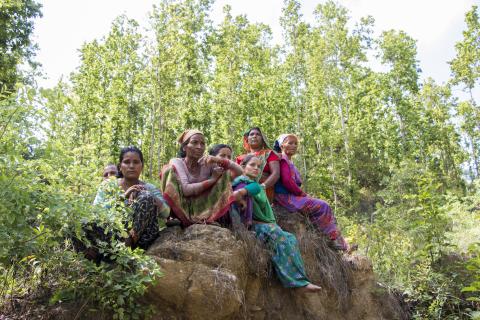
One model that emerged in Southern Africa was community-based natural resource management (CBNRM), shaped in part by a history of colonial land and wildlife policies that removed local rights over land and natural resources and centralized control of wildlife.
For many communities living alongside wildlife, conservation can have negative connotations. It may be experienced through crop damage, loss of life and livestock, restrictions on land use, and the opportunities, or lack thereof, to benefit from wildlife.
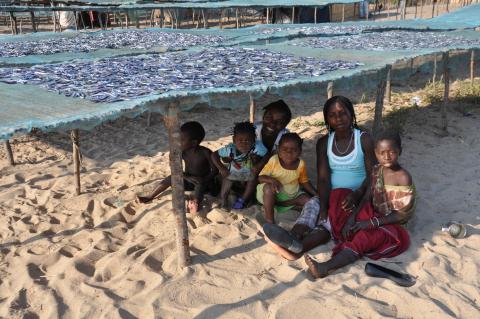
CBNRM emerged partly in response to these realities. Its premise is that communities living with wildlife should have meaningful rights, responsibilities, and benefits associated with natural resources.
This creates a fundamentally different starting point from the North American model. The question is not only how to manage wildlife populations sustainably, but also how to create legitimate institutions through which communities can participate meaningfully in decisions and derive real benefits from conservation.
The experience of CBNRM in Southern Africa demonstrates that governance cannot be separated from history. It also highlights an important lesson about living with wildlife: people's willingness to do so is influenced by whether they have meaningful rights and decision-making authority, whether the costs they bear are recognized, and whether wildlife generates tangible benefits for them.
A model that appears institutionally effective in one context may lack legitimacy in another if it does not address questions of rights, ownership, and historical exclusion.
India
Conservation in Shared Landscapes
The experience explored from India focused particularly on the challenge of conserving wildlife within one of the world's most densely populated countries, where protected areas and wildlife populations exist alongside large rural communities, extensive agricultural landscapes, and rapid economic development.
Protected areas can be critically important for biodiversity, but they exist within a much wider landscape in which millions of people depend on land and natural resources.
The Indian experience highlights the reality of people and wildlife sharing landscapes. Conflict is, in many places, an inherent part of living in a shared landscape. This reinforces the importance of coexistence, local institutions, and mechanisms for reducing the costs borne by communities.
It also demonstrates why conservation cannot be understood solely through the lens of protected-area management. Wildlife moves beyond boundaries, and so must conservation practice.
Central Europe
When Wildlife Recovery Brings New Challenges
Central Europe similarly encompasses different approaches to conservation and wildlife management. The experience considered during the session focused on the return and expansion of large carnivores, including wolves, in landscapes that have been heavily modified and managed by people for centuries.
Their recovery is a significant ecological achievement, but it can also create new social and political tensions. Farmers and rural communities may face livestock losses, while sections of the wider public may strongly support the return of predators.
The challenge is therefore not just a question of whether species such as wolves should exist. It is how societies decide what level of wildlife is acceptable, who makes those decisions, how conflicts are managed, and how the costs and benefits associated with wildlife are distributed.
This is a reminder that ecological recovery can itself create new governance challenges. Restoring wildlife does not necessarily mean that coexistence will follow automatically.
Different Histories, Familiar Questions
But the solutions cannot simply be transferred from one place to another.
The history of wildlife management in North America is not the history of CBNRM in Southern Africa. The relationship between protected areas and communities in India is not the same as that between farmers and returning predators in Europe. Cultural attitudes toward hunting, land, wildlife, and authority differ profoundly.
These differences matter because conservation approaches are not simply technical systems. They operate within social systems and reflect the histories, values, and political structures of the societies in which they exist.
What Can be Shared?
The value of international learning lies less in copying and pasting solutions and more in comparing principles and asking what they might mean in different contexts.
One principle that emerged strongly from the session was the importance of legitimacy. People are more likely to support conservation when they believe that decision-making is fair, that their concerns are heard, and that the benefits and costs are reasonably distributed.
A second is the importance of incentives. Conservation asks people to make choices. Those choices are influenced by whether wildlife represents an opportunity, a cost, a threat, or some combination of all three.
A third is the importance of governance, rights, and meaningful participation. Good ecological science is essential, but it cannot resolve questions about who has rights, who makes decisions, whose knowledge and priorities are considered, and who bears the costs of conservation.
And finally, conservation increasingly needs to be understood as a landscape issue. Protected areas remain indispensable, but biodiversity also depends on what happens in agricultural areas, communal lands, private properties, forests, rangelands, and other working landscapes.
Toward a More Human-Centred Approach to Conservation
These recurring principles point toward a broader question: what are the conditions that allow conservation to deliver lasting outcomes for both people and biodiversity?
This is where Human-Centred Conservation provides a useful framework. It is not another conservation model to sit alongside those discussed above, nor does it prescribe a particular approach. Instead, it provides a framework for thinking about the social, economic, cultural, and governance conditions that influence whether different conservation approaches can succeed and endure.
At its heart, Human-Centred Conservation recognizes that conservation outcomes and human outcomes are deeply interconnected. It does not mean prioritizing people at the expense of biodiversity. Rather, it asks us to consider questions of rights, governance, trust, incentives, local leadership, and the wider systems within which conservation takes place.
The experiences discussed at the conference illustrate these principles in different ways. The opportunity is to learn from these experiences without assuming that one model or approach should replace another. Conservation will be stronger when practitioners are willing to look beyond their own borders, understand different approaches and experiences, and consider the principles that cut across them.
There is no single blueprint for conservation. There are, however, lessons that travel: listen to the people living with wildlife, build institutions that earn trust, create incentives that endure, and recognize that conservation succeeds when people have a meaningful stake in its future.