Outdoor News Bulletin
Leveraging Regional Fish and Wildlife Health Coordination Across the United States
Increasing threats to the health of fish and wildlife populations, including emerging infectious and non-infectious diseases and toxins, challenge our ability to manage and conserve these valued resources. Diseases such as chronic wasting disease (CWD), highly pathogenic avian influenza virus, and most recently, New World Screwworm (NWS), have considerable ecological, cultural, and economic impacts, highlighting the interconnectedness of wildlife, domestic animal, human, and environmental health and underscoring the critical need for coordination of fish and wildlife health activities in North America.
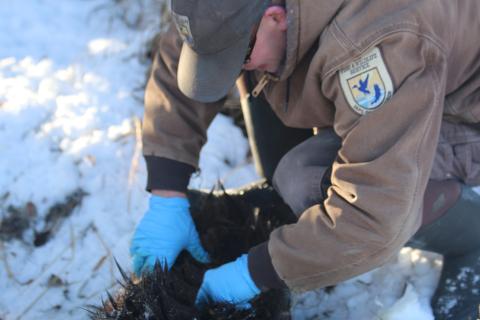
Regional Fish and Wildlife Health Coordinators (hereafter, Coordinators) were established between 2022 and 2023 for each of the regional fish and wildlife associations (Midwest Association of Fish and Wildlife Agencies [MAFWA], Northeast Association of Fish and Wildlife Agencies [NEAFWA], Southeastern Association of Fish and Wildlife Agencies [SEAFWA], and Western Association of Fish and Wildlife Agencies [WAFWA]) with three years of funding provided by the U.S. Fish and Wildlife Service (USFWS). These positions have increased capacity and strengthened the network of fish and wildlife health practitioners and other fish and wildlife management agency personnel within and across the regional associations and the Association of Fish and Wildlife Agencies (AFWA).
Collectively, the Coordinators have provided critical support for national efforts, including the revision of the AFWA National Fish and Wildlife Health Initiative Toolkit, ongoing efforts to update AFWA’s CWD Best Management Practices (BMPs), and integrating wildlife health into state wildlife action plan (SWAP) revisions. Most recently, the Coordinators, along with other state and federal wildlife health specialists, worked closely with colleagues from USDA APHIS Wildlife Services to review and provide feedback on the NWS Response Playbook and created educational NWS resources for natural resource agencies.
The Coordinators serve their respective regional associations to bring fish and wildlife agencies to readiness and encourage increased regional and national fish and wildlife health coordination.
Southeast
The Southeast Wildlife Health Coordinator, Dr. Ellen Haynes, serves as co-chair of the SEAFWA Wildlife Health Technical Committee and provides critical support to the SEAFWA Cervid Health Working Group, a group that recently has begun addressing a need for more cohesive CWD communication across the region. Additionally, Dr. Haynes has increased capacity in the Southeast through supporting and leading numerous wildlife health research projects, many in collaboration with the Southeastern Cooperative Wildlife Disease Study. Continued support for the Southeast Coordinator position is being provided through federal funds and funding provided by SEAFWA member states.
Northeast
The Northeast Wildlife Health Coordinator, Dr. Melanie Kunkel, serves as co-chair of the NEAFWA Fish and Wildlife Health Committee and provides wildlife health support to many of NEAFWA’s Technical Committees. Dr. Kunkel is working with NEAFWA member states and university collaborators to better understand the potential implications of anticoagulant rodenticides in the context of wildlife health, particularly in furbearer species. Continued support for the Northeast Coordinator position is facilitated through the USFWS’s new Collaborative Conservation Initiative (CCI), a streamlined mechanism that allows state agencies to pool federal funds under the Wildlife Restoration, Sport Fish Restoration, and State Wildlife Grant Programs to implement multi-state conservation projects.
Midwest
The Midwest Fish and Wildlife Health Coordinator, Dr. Tricia Fry, serves as co-chair of the MAFWA Fish and Wildlife Health Committee and Midwest CWD Committee. With MAFWA’s R3 and Relevancy Coordinator, she has led efforts to produce and implement BMPs related to the use of lead. The Voluntary BMPs for Reducing Unintended Ingestion of Lead Ammunition and Tackle Residues in Wildlife was formally endorsed by MAFWA Directors, partner organizations, and AFWA. Continued support for the Midwest Coordinator position is provided through federal funds and funding provided by MAFWA member states.
West
The Western Fish and Wildlife Health Coordinator, Dr. Anne Justice-Allen, and the Western Interagency Wildlife Health Specialist, Dr. Noelle Thompson, support the WAFWA Wildlife Health Committee and have led the development of numerous BMPs and guidance documents. Dr. Thompson chairs the WAFWA CWD Communications Working Group and facilitates the WAFWA CWD Management Working Group, and Dr. Justice-Allen was the previous chair of the Wildlife Health Committee. The WAFWA Coordinators are being supported through federal funds and grants for SARS-CoV-2 surveillance.
Since the creation of these regional positions, the Coordinators have worked collaboratively with each other and across agencies and partners to share information, coordinate efforts, and build programmatic capacity, including research projects, trainings, and drafting various technical and educational documents. These efforts promote fish and wildlife health endeavors, knowledge, and communication, all while increasing wildlife health capacity at local, regional, national, and international levels and contributing to the conservation of North American fish and wildlife.