Outdoor News Bulletin
Ancient Tourists Face Modern Threats
Alabama’s Gulf Coast is explored by nearly 8 million visitors each year. Among those visitors are the state’s native-nesting sea turtles and their emerging hatchlings. Classified as Threatened or Endangered under the U.S Endangered Species Act, the sea turtle species along Alabama’s Gulf Coast are at the center of a major research effort to support sea turtle population recovery.
Collaboration is the Name of the Game
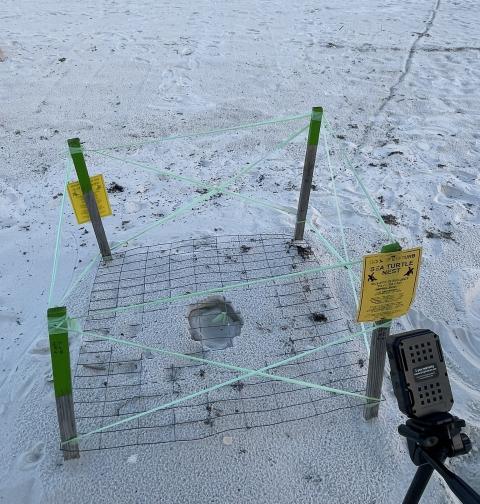
Protecting sea turtles along a densely visited coastline would be impossible without collaboration. Since 2003, the U.S. Fish and Wildlife Service (USFWS) has partnered with the Alabama Coastal Foundation’s Share the Beach program to monitor every known sea turtle nest laid on Alabama beaches. Now, researchers with the Alabama Cooperative Fish and Wildlife Research Unit (ALCFWRU) are helping turn more than two decades of community-collected observations into actionable science.
“This collaboration with the Alabama Cooperative Fish and Wildlife Research Unit will help us make faster, science based management decisions,” said USFWS biologist Erin Lentz, emphasizing the value of uniting research and on the ground conservation.
Dr. Jonathon Valente, Assistant Unit Leader of the Alabama Unit, and student Bella Suiter are working closely with USFWS biologists to analyze long-term nesting data and identify patterns to better protect vulnerable nests. As USFWS adds, “[The Cooperative Unit’s] applied research and technical support will allow us to identify vulnerable nests earlier and respond more effectively to new threats. Just as importantly, this partnership provides hands on training and education for students, ensuring the next generation of conservation professionals is prepared to tackle complex challenges along our coast.”
Sea Turtle Obstacles – Lights and Water
Several sea turtle species protected by the U.S Endangered Species Act nest along the coast: Loggerhead sea turtles (Caretta caretta), Kemp’s ridley (Lepidochelys kempii), and green (Chelonia mydas) sea turtles. Between May to August each year, hundreds of sea turtles visit Alabama beaches to nest and lay eggs. Hatchlings eventually emerge from nests and use the light of the moon to guide their way to the ocean while facing astounding odds. Each hatchling has only a 1 in 1,000 chance of surviving. Although ancient, nesting cycles like these are becoming increasingly difficult.
One of the biggest threats to sea turtle nesting originates from artificial lighting at beachfront homes, businesses, and roadways. Hatchlings instinctively crawl toward the brightest horizon, which naturally is the moonlit reflection on the Gulf. However, bright white artificial lights can pull them inland instead, where dehydration, predators, and vehicles pose deadly risks. Because sea turtles take decades to mature, even small losses at this early life stage can substantially reduce the number of individuals that ultimately survive to adulthood, leading to population-level declines over time.
Another growing concern is tidal flooding. As sea levels rise and storms intensify, more nests are being inundated by seawater, which suffocates developing embryos. Biologists along the Gulf Coast have documented increasing nest loss from flooding, and Alabama is no exception. In recent years, stronger storm surges and higher tides have pushed water farther up the beach, reaching nests that historically would have remained dry. Even small changes in water levels or storm patterns can have outsized impacts on Alabama’s already limited nesting habitat. Although sea turtles have nested successfully for millions of years before humans even reached North America, their success now depends on timely intervention and careful monitoring, which is where the USFWS, Share the Beach, and the ALCFWRU step in.
Real-Time Conservation Decisions
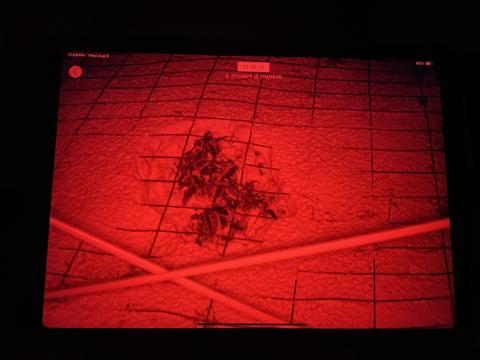
To address these challenges, Valente and Suiter are using geospatial analyses to examine where and when nests are most likely to fail. By combining nest location data, elevation models, and information on tides and storms, the team can identify nests that are at higher risk of flooding, sometimes even before water reaches them. This information allows wildlife managers to act quickly. When necessary, at-risk nests can be carefully relocated to safer areas of the beach, improving the likelihood that eggs will hatch successfully. At the same time, Valente’s lab is helping USFWS identify coastal areas where artificial lighting poses the greatest risk to hatchlings. Maps showing nesting hotspots alongside lighting intensity help managers prioritize where retrofitting lights or working with local communities will have the greatest benefit. Rather than reacting after nests fail, this approach helps conservation teams prevent losses before they happen.
Although Alabama’s coastline is small, its role in sea turtle conservation has the potential to influence conservation action well beyond the state. By pairing decades of citizen science monitoring with modern analytical tools, this USGS–USFWS partnership shows how a relatively short stretch of shoreline can generate insights that benefit sea turtle recovery across the Gulf Region. The project demonstrates that effective conservation does not rely on research alone or volunteers alone, but on partnerships that connect communities, students, scientists, and managers. Share the Beach volunteers provide long-term nest records that make this work possible, whereas federal agencies and university researchers turn those observations into practical tools for protecting nests from flooding, lighting, and habitat loss.
With coordination between non-governmental organizations and federal agencies, and with data-guided decisions on everything from lighting retrofits to nest relocation, Alabama’s beaches can continue to support sea turtles for generations to come and serve as a model for how local action can drive regional conservation success.
The ONB features articles from Cooperative Fish and Wildlife Research Units across the country. Working with key cooperators, including the Wildlife Management Institute, Units are leading exciting, new fish and wildlife research projects that we believe our readers will appreciate reading about. This article was written by Darcey Gans, a MS student at Auburn University who is mentored by Jonathon Valente, Assistant Unit Leader, USGS Alabama Cooperative Fish and Wildlife Research Unit. For more information about the Cooperative Research Units Program visit our website or email us at: crucomms@usgs,gov.