Outdoor News Bulletin
A Jack of All Trades or a Master of One
Once every four years, the Winter Olympics is upon us for 19 days, across 16 disciplines, and 116 medal events. Athletes dedicate their lives to their sports in hopes of someday representing their countries in these festive games where mere hundredths and thousandths of seconds or points determine the difference in what ABC’s Wide World of Sports used to call “the thrill of victory or the agony of defeat.” With such small differences determining success and failure, certain body types or muscle compositions can be associated with specific events. Perhaps some of the more striking comparisons of body types are from the Summer Olympic Games in which diminutive female gymnasts stand for photo opportunities alongside the freakish giants of men’s basketball. Despite the high degree of specialization and body type advantages that are selected by certain sports, there exists a certain intrigue and interest in the multidiscipline events.

Multidisciplinary Sports
In its crudest form, it’s often referred to as simply skiing and shooting, more specifically called the biathlon. This premier Olympic sport combines cross-country skiing with rifle shooting, demanding high-intensity endurance and precise marksmanship – the latter not easily accomplished with high heart rates and rapid breathing generated by endurance skiing. Introduced in 1960, biathlon features shooting a .22 rifle at 50m while in prone and standing positions, with missed shots resulting in penalty loops or time penalties. Nordic combined is another multidiscipline Winter Olympic event that uniquely merges ski jumping and cross-country skiing, testing athletes’ power and endurance by combining a ski jump with a long-distance ski race, with points from the jump determining the staggered start times for the skiing portion. It’s one of the oldest Winter Olympic sports, having been included since the first Games in 1924, and requires mastery of two very different disciplines.
In addition to the aforementioned two-sport events, the Summer Olympics also includes the triathlon, pentathlon, heptathlon, and the event labeled as “the world’s greatest athlete” event, the decathlon. Although we are fascinated by the specialists and their unique sport specific skills, we seem to take a special and heightened interest in the multidiscipline events. The events that combine different skills or involve multiple disciplines seem to garner even more interest and intrigue from viewers. We are also intrigued by the nontraditional pathways to excellence and the non-conforming individuals who fall outside of the traditional norms and expectations. The more numerous and diverse the individual, the pathway, and the skill set, the greater the intrigue.
Generalization vs Specialization
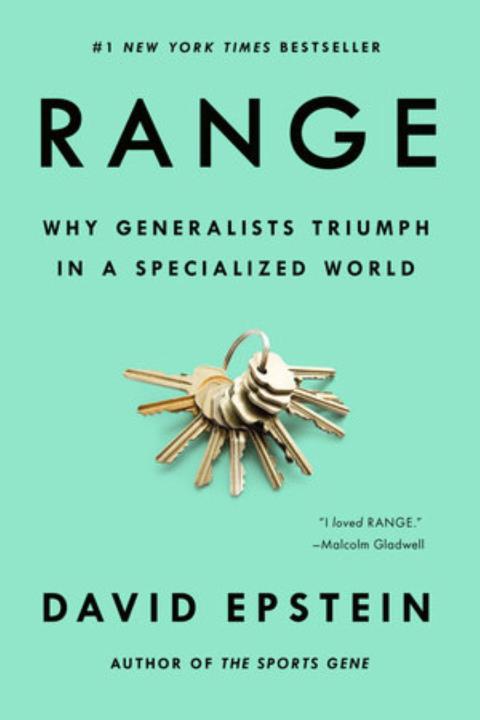
Perhaps it’s because of our respect for the incredible specialized skills in each event or sport that we also see great value in the breadth of the abilities necessary for success in the multidiscipline events. Author David Epstein wrote about it in his 2019 book Range: Why Generalists Triumph in a Specialized World. The author acknowledges that while specialization is useful for specific sports and the kinds of problems found in closed predictable environments like a chess game or playing music, the modern world is characterized by “wicked” problems that require people to deal with a new situation where they cannot rely on perfecting from known experience. As he puts it: “And that is what a rapidly changing, wicked world demands – conceptual reasoning skill that can connect new ideas and work across contexts.” He then expands on this general idea to argue that range, combining knowledge and experience from multiple fields and late specialization, is a better focus than early specialization.
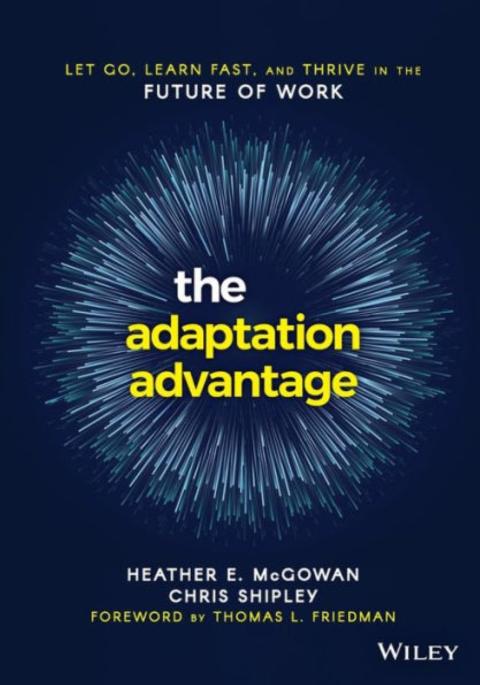
Similarly, The Adaptation Advantage: Let Go, Learn Fast, and Thrive in the Future of Work, a 2020 book by Heather E. McGowan and Chris Shipley also highlights the value of diverse, multidiscipline skill sets. The authors argue the key to success in a rapidly changing world of work is to embrace continuous learning, unlearning, and adaptation, by detaching personal identity from job titles and connecting it to purpose.
The authors of both books argue that the modern world has become a wicked environment—one that is complex, unpredictable, and rapidly changing—requiring a shift away from narrow specialization toward a more flexible, human-centric approach to work and life.
Consistent Messages and Themes
The Value of Breadth and Generalization
Epstein argues that in wicked environments where rules are unclear, generalists who can connect dots across disciplines often outperform specialists and in The Adaptation Advantage, the authors emphasize the need for an agile learning mindset, which involves the ability to learn, unlearn, and adapt across different contexts, rather than relying on a fixed set of skills.
Lifelong Learning over Fixed Expertise
Epstein highlights desirable difficulties and the benefit of a sampling period where individuals explore various fields before specializing, leading to better long-term match quality. McGowan and Shipley advocate for extending formal education into continuous lifelong learning, viewing change as a propellant rather than a burden.
Detaching Identity from Job Titles
Epstein suggests that being all over the place can be a superpower, and that the “end-of-history illusion” causes us to underestimate how much we will change in the future. In The Adaptation Advantage, a central theme is the necessity of detaching personal identity from specific job titles and instead connecting it to a broader sense of purpose, which fuels ongoing adaptation.
Human-Centric Skills in an Automated World
Epstein notes that while computers excel at “kind” problems (like chess) through tactics and pattern matching, humans have a comparative advantage in “wicked” problems that require strategy and conceptual reasoning. The Adaptation Advantage authors argue that as automation handles routine tasks, uniquely human capabilities – such as empathy, creativity, collaboration, and social intelligence – become the most essential for future success. These traits are all the more important as we stand on the cusp of AI and all the resulting possibilities and complications.
Embracing Uncertainty and Failure
Range highlights that outsiders and “deliberate amateurs” often solve problems that stump experts because they are not blinded by established rules or narrow expertise. The Adaptation Advantage encourages leaders to foster psychological safety where teams feel safe to experiment, fail, and admit they don’t have all the answers.
Applying it to Conservation
Applying all these themes and tenets to the conservation field is particularly relevant because conservation is the ultimate wicked problem. It involves unpredictable biological systems, shifting political landscapes, and the accelerating impacts of resource demands. These messages translate specifically well for conservation professionals and organizations from specialists to systems thinkers as conservation has traditionally been a field of deep silos (e.g., a wolf biologist or a wetland botanist).
While deep expertise remains absolutely necessary, the most effective conservationists today are those with range. A land manager who understands not just ecology, but also human dimensions (to influence local communities), data science (to analyze remote sensing), and conflict resolution (to navigate stakeholder disputes) will be far more effective than one who only knows the biology of a single system or species. Success in conservation now requires connecting the dots between ecosystem health, human health, and animal health in ways not previously connected.
Conservationists often have deep emotional ties to specific landscapes or traditional methods of protection. The Adaptation Advantage warns against tying identity to a static state. In a changing environment, a conservationist’s identity cannot be “the person who keeps this forest exactly as it was in 1950.” Workers must shift their identity to their purpose (e.g., steward of biodiversity) rather than their method (e.g., protected area manager). This allows for the unlearning of old strategies that no longer work in a different world and leaning into new approaches such as assisted migration or novel ecosystem management.
Surprise... It's About the People
Conservation is often mistakenly viewed as a hard science problem, but it is fundamentally a people problem. Technical skills like GIS or lab analysis are increasingly being streamlined by AI and automation. The human-centric skills mentioned in both books –empathy, storytelling, and ethical judgment – are becoming the primary levers for conservation success. A conservation worker’s value is moving from collecting data to building trust with indigenous communities, private landowners, and policymakers.
The conservation field is notorious for requiring long, low-paid volunteer or technician stints that reward those who decide early and narrow their focus. Range suggests that those who enter conservation later in life – or after a “sampling period” in business, tech, or the arts – bring diverse perspectives that lead to breakthroughs. Organizations should value outsider perspectives. A conservation team might benefit more from hiring a former community organizer or a tech product manager than adding a fifth PhD in the same narrow sub-discipline thinking that more data will win the day.
I love spending time in the field with subject matter experts. There is no doubt that in conservation we need both the specialists who help us to understand nature’s more subtle intricacies, as well as the generalists who can help us in understanding our blind spots as well as applying our trade. It is both the incredible specialization of the narrowly skilled experts as well as the diversity of sports, skillsets, unique pathways, and diversity of individuals that makes the once in four-year event of the Olympics the spectacle that it is.
Conservation might just be much the same. It is specialization that offers stability in “normal” circumstances but in the ever-changing and dynamic environment in which we find ourselves, generalists develop resilience, adaptability, and foresight in disorder and chaos. Individual circumstances ultimately dictate both skillset requirements and the ideal proportions of each that are needed. One thing is certain – specialists and generalists each have their place, yet the story written across ecosystems is the same: those species that can adapt, adjust, and endure are the ones most likely to survive.