Outdoor News Bulletin
Special Sessions at North American Conference Announced
The program steering committee for the 91st North American Wildlife and Natural Resources Conference has announced the event’s four special sessions. These sessions will be held on the mornings of Wednesday, April 1st, and Thursday, April 2nd, 2026, at the Hilton Columbus Downtown in Columbus, Ohio.
Special Session 1
Conservation Models Beyond North America: Global Lessons for Shared Challenges
Session Co-Chairs:
Katie MacKenzie, Jamma International
Tony Wasley, Wildlife Management Institute
Wednesday, April 1, 2026 – 10 am to noon ET
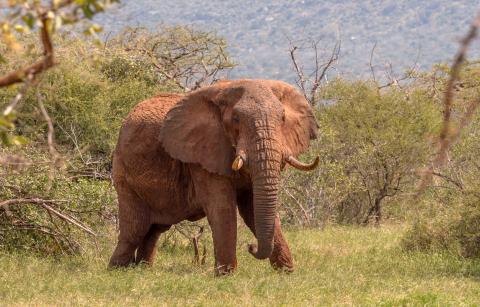
Conservation across the world is grappling with a common set of pressures: increasing human–wildlife conflict, resource commercialization, contested land use, climate events, political polarization, declining trust in institutions, and debates around sustainable use. But while these challenges are global in scale, the models used to address them vary significantly due to culture, history, and geography.
Natural resource professionals, agencies, and organizations can greatly benefit from critically reflecting on assumptions of their own conservation models, studying transferable lessons from other countries, and considering how global perspectives can inform wildlife management, policy, and practice in North America.
This special session will bring a deliberately international and comparative perspective to the North American Wildlife and Natural Resources Conference by examining conservation models from Africa, Asia, and Europe. Rather than presenting isolated case studies, the session will focus on shared conservation principles, exploring how they are interpreted, operationalized, and contested in different regional contexts.
By moving beyond the North American conservation paradigm to explore diverse conservation frameworks from across the globe, speakers will trace the origins of their models, evaluating their strengths and weaknesses in practice. By comparing how these approaches tackle shared complexities, this session invites participants to critically examine their own methodologies and consider alternative strategies for sustainable success. This interactive dialogue aims to broaden professional perspectives and foster international collaboration to help address key conservation challenges.
Special Session 2
Advancements in Hunting and Fishing Technology: A Fair Chase and R3 Conundrum
Session Co-Chairs:
Gordon R. Batcheller, Association of Fish and Wildlife Agencies
Lane Kisonak, Association of Fish and Wildlife Agencies
Wednesday, April 1, 2026 – 10 am to noon ET
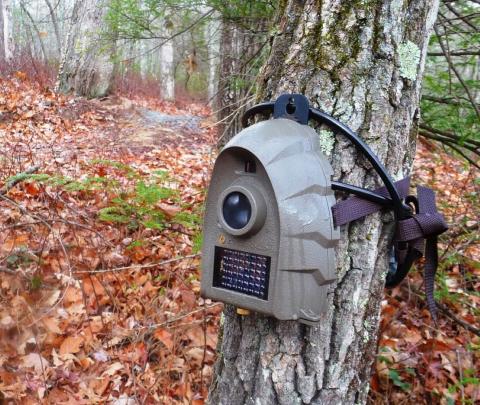
Advancements in hunting and fishing technology are nothing new. From Stone Age arrowheads to the relatively recent advent of gunpowder and firearms, North America’s recreational hunting and fishing traditions draw on technologies that span the timeframe of human existence.
While advancements in technology remain constant, the scope and breadth of recent developments are novel, enabled largely by the miniaturization of hardware, the sophistication of software, and an increase in their affordability to consumers. While it is tempting to think of these changes as strictly social in nature, they may have implications for managing sustainable harvest of certain sportfish and game species, the future implementation of R3, and the cultural acceptance of hunting and possibly fishing. Regardless, it’s clear that technology available to hunters and anglers is getting smarter, smaller, and cheaper. This reality poses significant questions. For example, could the rapid adoption of advanced technology erode public support for hunting and fishing if the use of such technologies is perceived as being unfair? Or might the availability of advanced technologies have a positive effect on hunter and angler recruitment, retention, and reactivation, since young people have a strong affinity for technology? Several state fish and wildlife agencies have already established committees of agency personnel and stakeholders to address these and many other rapidly emerging questions.
This special session will present an overview of the current status of technological advancements in hunting and fishing. Speakers will establish the basis for an ongoing narrative on the implications of those advancements to fish and wildlife management and fair chase, including public acceptance of fishing and hunting, and propose a path forward to ensure that fish and wildlife agencies and their conservation partners remain at the cutting edge of these developments.
Special Session 3
Navigating Uncertainty: Decision Science to Benefit Fish and Wildlife Management Agencies
Co-Chairs:
Brian Folt, US Geological Survey
Sarah Converse, US Geological Survey
Conor McGowan, US Geological Survey
Thursday, April 2, 2026 – 8 am to 10 am ET
Natural resource managers are challenged by difficult decisions that present great uncertainty, competing objectives, an overwhelming number of options, and passionate stakeholders. Decision science offers a suite of tools – structured decision making, value-of-information analysis, among others – that can help managers understand, analyze, and communicate the nature of problems and benefits of preferred options in transparent and effective ways. However, these tools are underused across many agencies and organizations, likely due to a lack of staff training, program capacity, or familiarity on decision science and the opportunities it may provide.
In this session, presenters will introduce decision science and describe how it has been successfully implemented to improve process and management outcomes of state and federal natural resource agencies. Speakers from the US Geological Survey’s Cooperative Fish and Wildlife Research Unit (CRU) Program, an agency with a strong history of providing applied decision science support to state and federal agencies, will present case studies of big problems that were successfully navigated through strong working relationships between agencies and CRU scientists. Presentations will outline a practical roadmap of existing resources and opportunities available for agencies to access or build internal decision science in their own programs. The session will end with an interactive exercise(s) to demonstrate simple ways that natural resource practitioners can utilize decision analysis to understand problems and work toward solutions.
Attendees will leave the session with (1) a clearer understanding of what decision analysis is (and isn’t), (2) tangible examples of how agency staff have worked with scientists to improve outcomes for important natural resource management decisions, and (3) practical guidance and resources for involving decision analysis in their work and agency.
Special Session 4
Energy Development: Finding the Nexus with Conservation, Community, and Collaboration
Co-Chairs:
Casey Stemler, Spectrum Outdoors
David Willms, National Wildlife Federation
Thursday, April 2, 2026 – 8 am to 10 am ET
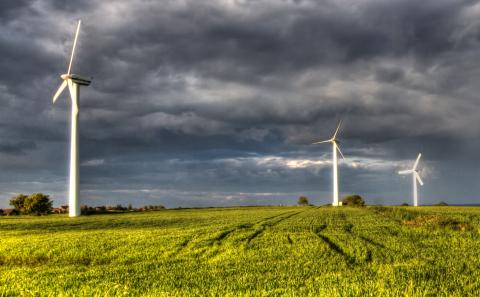
Various forms of energy provide the foundational elements of a developed country. It’s difficult to imagine daily life without electricity, without fuel to power vehicles, or without the natural elements that allow computers and phones to function. However, every form of energy development has an impact on our natural environment: land conversion and fragmentation, direct mortality of wildlife, or the disruption of vital terrestrial or aquatic migration pathways by energy development projects. As the human population continues to grow, demand for energy will continue to increase, and its impact on the natural environment will expand. Energy development will continue regardless of what political party is in power in Washington, DC or in state capitals across the country. Therefore, it is critical that the conservation community effectively collaborate with energy development companies to manage and mitigate their impact on natural resources.
The conservation community can celebrate many examples of successfully working with companies to lessen the impact of energy development. However, hearing directly from industry representatives on their conservation programs and efforts will bring a fresh perspective to the collective conversation. Session speakers representing several major companies will address critical questions such as why do they embark on particular research projects, why do they provide financial support to non-governmental organizations conducting habitat/wildlife conservation, why do they invest resources to mitigate the impact they are having? The session will close with a panel discussion of how the conservation community can more effectively engage with energy development companies before and throughout the development and operational phases of an energy project.
Attendees will hear from oil and gas, renewable, pipeline, and mining companies supporting conservation research projects and collaborating with communities. The final Q&A panel discussion will provide attendees with the opportunity to learn how to be more effective in developing conservation opportunities with industry while also creating collaborative partnerships that can minimize impacts on our natural environment.