Outdoor News Bulletin
Innovations in Conservation – Reclaiming Collaboration, Trust, and the Ecosystem Mandate
This article presents the speech given by Leopoldo Miranda-Castro, Executive Director of the Conservation Without Conflict Coalition at the Plenary Session of Missouri Natural Resources Conference on February 4, 2026, in Osage Beach, Missouri. Titled “Innovations in Conservation – Reclaiming Collaboration, Trust, and the Ecosystem Mandate,” the address outlines an eight-step framework for trust-based, collaborative conservation that centers private landowners; calls for reclaiming the Endangered Species Act’s original ecosystem-focused mandate (Section 2(b)); critiques the limitations of single-species regulatory approaches; and illustrates effective incentive-driven models through the Louisiana black bear recovery and the Partners for Fish and Wildlife Program. The speech concludes with a direct appeal to students and young professionals to lead with bold collaborative innovation and creativity in advancing species recovery alongside productive land use. The full text is published in the Outdoor News Bulletin to preserve these insights and foster continued dialogue on scalable, effective conservation strategies.

“Good morning. It is an honor to address you at the Missouri Natural Resources Conference as we explore this year’s theme: Innovations in Conservation.
My name is Leopoldo Miranda-Castro—Leo to most. I spent decades with the U.S. Fish and Wildlife Service, retiring as Southeast Regional Director, and I now lead Conservation Without Conflict while managing our family’s Ochillee Farm.
My career began as a Private Lands biologist in Puerto Rico, listening to landowners, building trust, and finding ways to restore habitats while keeping farms and ranches productive. Those early experiences taught me a simple truth: lasting conservation happens with people, not despite them.
That truth echoes Aldo Leopold’s land ethic—he urged us to enlarge our community to include soils, waters, plants, animals, and the people who steward them. Today, private landowners manage the majority of habitat across this nation and its territories. We cannot conserve species or ecosystems without their leadership and pride in ownership.
Yet for too long, conservation has sometimes been framed as conflict rather than collaboration; an “us versus them” mentality.
I believe we can change that. Today, I want to share a practical roadmap we developed—a living, simple, step-by-step guide to achieving Conservation Without Conflict—and show how innovative tools, applied with trust and flexibility, are already proving it works. It works for the species that we cherish, for their habitats, and for landowners and managers across our nation.
Most importantly, I want to challenge some long-held assumptions and invite you—especially the students and young professionals in this room—to lead the next chapter of American conservation with boldness, creativity, and innovation.
The Step-by-Step Guide
Several years ago, I worked on a short article summarizing the lessons from dozens of successful conservation initiatives I experienced throughout my career into an eight-step guide. This is not theory. It’s based on real-world projects that had multiple environmental, economic, and cultural benefits.
Briefly, the steps are:
- Embrace the local context—listen first. This first step involves embracing and understanding the local context by carefully listening to local stakeholders and diving deeply into the unique social, economic, cultural, political, and historical factors that shape the communities involved. Genuine engagement with individuals, local communities, indigenous groups, and stakeholders is essential to establish trust and respect. By showing sincere interest in their needs, concerns, and aspirations, a strong foundation for fruitful collaboration can be laid.
- Empower meaningful engagement of landowners and communities. Empower landowners, local communities, NGOs, government agencies, scientists, and other key stakeholders through meaningful engagement and participation early in the process. Create spaces for open and safe dialogue, such as workshops and field trips, where everyone’s voices are heard and actively incorporated into decision-making. This approach taps into local knowledge and experiences, fostering a sense of ownership and shared land stewardship.
- Unite around clearly shared goals. Identify and articulate crystal-clear shared goals for the natural environment, landowners, local communities, and other stakeholders, providing direction, focus, and motivation. Showcase the benefits of conservation efforts in enhancing local economies, livelihoods, and ecosystem services, while emphasizing positive outcomes like improved health, sustainable income, and environmental resilience. Uniting around these aspirations builds strong alliances based on trust and helps overcome potential conflicts.
- Implement adaptive management—learn as you go. Adopt adaptive management strategies that promote flexibility, learning, and continuous improvement in response to changing circumstances and new insights. Regularly monitor and evaluate outcomes, seeking feedback from local landowners and communities, and adjust strategies accordingly. This adaptability fosters innovation, builds trust, and ensures conservation approaches remain effective and relevant.
- Foster sustainable livelihoods alongside conservation. Integrate livelihood considerations into conservation planning by acknowledging the dependence of landowners and communities on natural resources for their well-being and economic survival. Explore opportunities for sustainable income generation through responsible resource management, outdoor activities, or nature-based enterprises. Linking sustainable livelihoods with conservation creates incentives for active support and engagement in collaborative conservation efforts.
- Build capacity for landowners and local partners. Invest in capacity-building initiatives, such as training, education, and skills development programs, to enhance understanding of sustainable resource management among government employees, landowners and local communities. Encourage the formation of local groups and ensure their inclusion in decision-making processes. This empowerment cultivates a sense of ownership and long-term land stewardship essential for success.
- Establish simple, inclusive collaborative governance. Create simple, inclusive, and transparent governance mechanisms—formal or informal—that actively involve all stakeholders in decision-making. Clearly define authorities, responsibilities, and expectations for each public and private partner, while collaborating across landowners, communities, businesses, agencies, and NGOs. Sharing knowledge, power, and benefits in this way supports conflict resolution and an equitable conservation framework.
- Cultivate continuous communication and shared learning. Maintain constant open lines of communication with all stakeholders through feedback mechanisms, regular updates, progress reports, and inclusive monitoring efforts that value traditional knowledge. Promote information sharing in formal and informal settings, openly celebrating successes and learning from mistakes. Ensure information is accessible, culturally appropriate, and delivered through varied mediums to foster effective ongoing dialogue and learning.
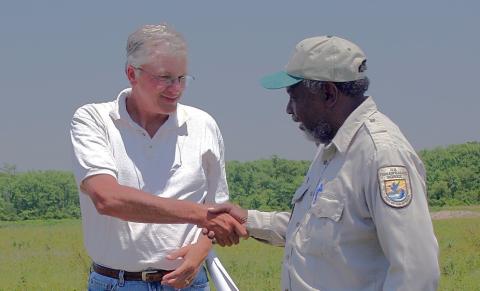
These simple steps place trust at the center and private landowners as essential partners. When we follow them, regulation becomes the backstop, not the starting point.
Part 2: Reclaiming the Ecosystem Mandate of the Endangered Species Act
To innovate fully, we must sometimes challenge the status quo—even on foundational tools.
I have asked hundreds of conservation professionals across decades: “What is the primary purpose of the Endangered Species Act?” I ask you all the same question. Almost without exception, the answer is: “To prevent endangered species from going extinct.” Or a similar answer. That single-species focus has shaped much of our training, regulatory processes, and conservation planning.
But that is not what the law actually says.
Section 2(b) of the Endangered Species Act, signed into law in 1973, declares, and I quote:
“The purposes of this Act are to provide a means whereby the ecosystems upon which endangered species and threatened species depend may be conserved…”
From day one, over 53 years ago, We The People, through Congress, mandated an ecosystem conservation approach to conserve species—a landmark vision that was remarkably forward-thinking.
Yet in practice, we often narrowed our efforts to individual species, with little success. By focusing predominantly on single-species conservation planning and management, we are not only diverging from the explicit ecosystem-based purpose articulated in the ESA but also failing to achieve significant, lasting progress in the recovery and conservation of the very species we seek to protect.
This narrow approach has yielded limited results: many listed species remain in peril, the list is expanding, recovery plans often stall, and delistings due to successful recovery are rare. Over the past five decades, the implementation of the ESA has been heavily shaped by litigation and conflict, which have driven a reactive, regulatory-focused paradigm.
Government agencies, industry stakeholders, and many private landowners have understandably prioritized compliance with permitting requirements, critical habitat designations, and prohibitions on “take” under Section 9—often in response to legal challenges—while the broader, proactive mandate of ecosystem conservation outlined in Section 2(b) has received far less attention. It is like the ‘Teaching to the Test’ approach where the focus is to comply with the testing and not to meaningful, deeper, and broader learning.
This regulatory, process-oriented emphasis, while necessary for establishing minimum protection and checking a box, has fostered an adversarial environment that distracts effective, collaborative, ecosystem-scale solutions. Instead of harnessing the ESA’s built-in flexibility, we have too often defaulted to a compliance-only model that treats landowners, land managers, and others as potential violators rather than essential partners in conservation of listed and at-risk species.
The result is a missed opportunity to align conservation with productive land uses, such as sustainable forestry, ranching, farming, biomass production, and so on, where private working lands can simultaneously support economic vitality and well-functioning ecosystems.
I would argue that a return to the ESA’s original ecosystem vision, grounded in voluntary incentives, trust-building, and multi-stakeholder collaboration, offers a more effective path forward—one that honors Congressional intent while delivering meaningful outcomes for effective species recovery at scale.
In recent years, the conservation community and academia have rightly shifted toward landscape-scale and ecosystem-based strategies, presenting them as new paradigms. They are not new. They are a return to the original intent of the Act and to even back to Aldo Leopold’s philosophy on the land ethic.
Now is the time to take that legal mandate to heart and innovate boldly in how we implement it nationwide.
Try new things boldly. The worst-case scenario is a plan that doesn't work. That is perfectly fine. In fact, most plans do not work. When that occurs, learn from it, adapt, and try the next idea.
Imagine managing entire ecosystems—from the frozen tundra of Alaska to the tropical rainforests of Puerto Rico, from the beaches of Hawaii to the watersheds of Chesapeake Bay—across a mosaic of working private lands, public and private conservation areas, and connected habitats. That is the scale this landmark law envisioned, and it is the scale at which lasting recovery of species and habitat conservation occurs.
Strong laws like the ESA set essential social sideboards, reflecting our American values. Within those boundaries, we must be as flexible and creative as possible. As my good friend Jimmy Bullock would say, paraphrasing him, “if an idea is not prohibited by law, it means we can—and should—try it.”
Consider two species that came under scrutiny by the Endangered Species Act during the very same summer of 1990—the northern spotted owl in the Pacific Northwest and the Louisiana black bear in the bottomland hardwood forests of Louisiana, Mississippi, and eastern Texas. Both species faced severe habitat loss from habitat fragmentation and conversion, yet their conservation paths and outcomes could not have been more different.
The northern spotted owl was listed as threatened in June 1990 without a tailored rule under Section 4(d) of the Act. Full prohibitions on take were applied from the start, treating the threatened owl with the same regulatory rigor as an endangered species. This approach triggered decades of conflict with the timber industry and private landowners, limited voluntary cooperation, and, despite massive federal efforts such as the Northwest Forest Plan, failed to halt significant population declines. More than three decades later, the owl remains listed as threatened, with ongoing challenges to its recovery.
By contrast, the Louisiana black bear—receiving its positive listing finding just weeks after the owl’s final rule—was listed as threatened in 1992 with a carefully crafted 4(d) rule. That rule exempted normal silvicultural practices from take prohibitions, provided they avoided harm to denning bears and den trees. This flexibility removed fear of regulatory overreach, encouraged private landowners to actively participate, and opened the door to true collaboration. Through voluntary partnerships with private landowners and programs such as the Wetlands Reserve Program and the Partners for Fish and Wildlife Program, more than 600,000 acres of bottomland hardwood habitat were restored. Bear populations grew from fewer than 150 individuals to an estimated 1,200–1,500, threats were effectively mitigated, and the species was recovered and successfully delisted in 2016. Post-delisting monitoring confirmed sustained recovery, proving that bears and working forests can thrive together.
These two stories from the same era illustrate a profound truth: rigid, one-size-fits-all regulation often breeds conflict and stalls progress, while flexible, incentive-based tools that respect landowners foster trust, conserve entire ecosystems, and achieve lasting recovery at scale. This mirrors the collaborative, ecosystem-focused vision of the Endangered Species Act of 1973, and is the path we must retake.
Part 3: A Concrete Innovation in Action – The Partners for Fish and Wildlife Program
We do not need to wait for new legislation. Innovative pathways already exist in the Endangered Species Act. The problem is that, as I mentioned earlier, the agencies administering the ESA have focused on single species management and the prescriptive regulatory framework developed through decades of litigation and conflict.
Many of you are familiar with the ESA mandate for federal agencies, all of them, to ensure their actions do not jeopardize the continued existence of listed species. This is described in Section 7 of the Act. Specifically, in Section 7(a)(2).

However, just like with the purpose of the ESA mentioned earlier, most people skip over the very first few sentences of Section 7. Section 7(a)(1) mandates that all federal agencies use their own authorities to actively conserve and recover listed species. In other words, this section requires that federal agencies use their existing programs to proactively contribute to species recovery and conservation. Unfortunately, practice has largely focused on compliance—checking the box—rather than proactive conservation.
We can do better. One of the most powerful examples of one of those authorities that can be used to recover species and protect landowners is the Partners for Fish and Wildlife Program—the very program I helped establish in Puerto Rico and helped coordinate at the national level, decades ago. Recent refinements have made it even more effective.
Through voluntary cooperative agreements with substantial federal involvement, the program triggers an intra-Service Section 7 consultation that not only ensures agency compliance, but it also provides landowners direct regulatory assurances—including incidental take coverage—at no cost. This process is completed often in months rather than years using other traditional permitting tools.
Individual farmers, ranchers or forest owners can receive assurances quickly. More importantly, programmatic “umbrella” agreements now cover landscape-scale initiatives: the Working Forests Conservation Initiative spanning 46 million acres, and the longleaf pine restoration efforts across eight southeastern states.
These efforts restore entire ecosystems, benefit multiple at-risk and listed species, and keep working lands productive—all without burdening landowners. They embody the ESA’s ecosystem mandate, follow the steps of collaborative conservation, and prove that long-lasting voluntary incentives and trust can achieve what conflict rarely or never does.
Conclusion
As I close, I want to speak directly to the students and young professionals in this audience. You are beginning your careers at a pivotal moment. In the coming years, many of you will become the managers of our lands (private or public), the architects of policy, and the leaders of agencies and programs across this nation.
You will inherit both the challenges and the extraordinary opportunities we have discussed today.
If you remember one thing from this talk, let it be this:
Be innovative. Never accept “we cannot do that” as the final answer. There is always a way to approach and solve conservation problems—through trust, collaboration, and creative partnerships with private landowners.
Try new things boldly. The worst-case scenario is a plan that doesn't work. That is perfectly fine. In fact, most plans do not work. When that occurs, learn from it, adapt, and try the next idea.
You have the power to reclaim the ecosystem vision of the Endangered Species Act, to scale collaborative conservation across all working lands, and to build a future where species and habitats thrive alongside prosperous communities.
That future is in your hands. I am confident you will shape it with wisdom, courage, and unrelenting creativity.
Thank you. I welcome your questions.”